
Building Universes J.F. Monroe's Journey from Ordinary to Extraordinary
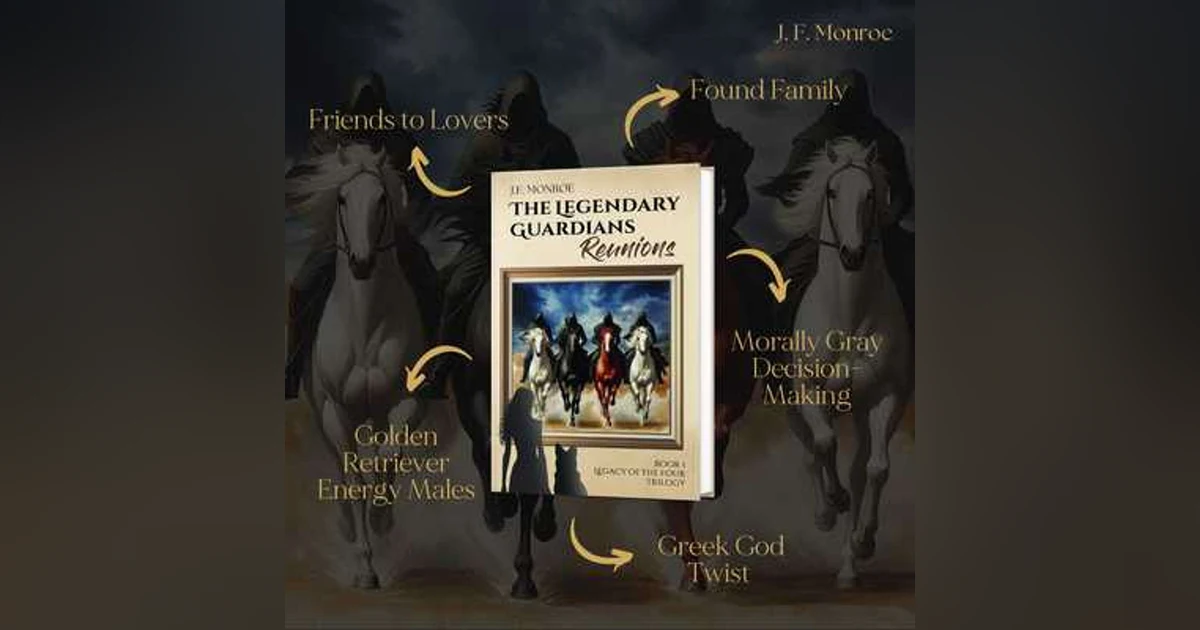

Send us a text Join us for an insightful episode of Living the Dream with Curveball as we welcome the talented author J.F. Monroe, creator of the captivating Legacy of the Four trilogy. J.F. shares her journey from aspiring writer to published author, emphasizing the importance of building relatable characters amidst fantastical settings. Discover her unique approach to blending romance with high-stakes fantasy, and how her characters' emotional struggles resonate with readers on a profound l...


 RSS Feed
 Join us for an insightful episode of Living the Dream with Curveball as we welcome the talented author J.F. Monroe, creator of the captivating Legacy of the Four trilogy. J.F. shares her journey from aspiring writer to published author, emphasizing the importance of building relatable characters amidst fantastical settings. Discover her unique approach to blending romance with high-stakes fantasy, and how her characters' emotional struggles resonate with readers on a profound level. J.F. also reveals her cinematic vision for her work and the pivotal lessons she has learned throughout her writing process. With her upcoming book release just around the corner, this episode is filled with inspiration and motivation for anyone pursuing their dreams.
Welcome to the Living the Dream podcast with Curveball. Today I am joined by author J.F. Monroe
>> Curtis Jackson (also known as DJ Curveball): Welcome to the Living the Dream podcast with Curveball. if you believe you can, achieve. Welcome to the Living the Dream with Curveball podcast, a show where I and a few guests that teach, motivate and inspire. Today I am joined by author J.F. munro. So we're going to be talking to her about her book trilogy and about what she means when she says, when reality isn't enough, you build your own universe. So, Ms. Monroe, thank you so much for joining me.
>> J.F. Monroe: Thank you for having me, Curtis. This is a pleasure. I really appreciate it.
>> Curtis Jackson (also known as DJ Curveball): Why don't you start off by telling everybody a little bit about yourself?
J.F. Munroe is the author of the Legacy of the Four Series
>> J.F. Monroe: Absolutely. So I am J.F. munroe. I'm author of the Legacy of the Four Series. the first book is out the Legendary Guardians Reunions. It is a fantasy romance trilogy that mixes, mythology, adventure and all the wonderfully messy, deeply human emotions that make stories stick with you. when I'm not being J.F. monroe, which is a pen name that I write under, I am a born and raised New Yorker. I hang out with my husband and our six year old son, our one eyed dog. And I spend way too much time playing video games and binge watching movies and reading and fueling it with just a ton of, coffee. So that's a little bit about me.
Okay, talk about how you got into writing in the first place
>> Curtis Jackson (also known as DJ Curveball): Okay, we'll talk about how you got into writing in the first place.
>> J.F. Monroe: Sure. So I always loved writing from a very young age. I realized even, you know, in high school, I took a lot of English courses, I took a lot of script writing courses. And that is where my love really kind of bloomed for, for writing. I, when I started to imagine the Legacy of the Four trilogy, I was convinced that it was going to be this epic screenplay I had. Like I said, I took a lot of script writing courses. I was very interested in the four Horsemen mythology. And so I was just like, yes, I can see this as being a screenplay that I can submit to, you know, platforms like Coverfly and see it shine that way. However, you know, it refused to fit into this 90 page script that a screenplay usually calls for. And so before I knew it, I had this full fledged novel that was now the first of a three part series. And the first part started when I was actually on maternity leave. you know, just about to have my son. So about six years ago. but my love for it started with just like, I guess the, the most recent, the, the memory I can recall the most is third grade. We read the lion, the Witch in the Wardrobe, and then further you, know, as I got into, you know, school some more, it was Lord of the Rings and I just, I fell in love with not only the fantasy genre, but just books in general and, and, and writing, you know, writing like that. So it was very, it was a very exciting journey for me. But it was a very long journey, though.
Your trilogy emphasizes the emotional struggles of the characters
>> Curtis Jackson (also known as DJ Curveball): Well, your, your trilogy emphasizes the emotional struggles of the characters. So how do you make sure that readers, can connect and, you know, empathize with the characters, even though it's a fantasy series?
>> J.F. Monroe: That's a great question. So this was a, this was very important to me when I started writing the trilogy. and I, I'll talk a little bit more about my process later on, but I was a learn as you go person. And so though I knew that, listen, I'm writing about fantastical worlds where angels and demons, you know, are ruling lands alongside humans. My focus was always on making my characters profoundly human in their struggles, in their triumphs. Even when they wielded undiluted power, they were vulnerable in their feelings and, and choices and conflicts. So at its core, if you strip away the fantasy elements, my trilogy is really about like, identity and choice and growth and love and about being unapologetically human. You know, struggles of sacrifice and redemption and tension are between selfishness and selflessness. Make the journeys, these fantastical journeys relatable and impactful. And so that's what I try to, to do in this trilogy. So like, a lot of stuff is going on in the background that is like fantasy driven, but at, ah, its core with the characters. I make sure that their reactions to things are as human as I possibly could so that, so that the, the readers could relate to them.
I love exploring the full spectrum of morally gray villains in my novels
>> Curtis Jackson (also known as DJ Curveball): Yeah, and that was going to be my next question about, you know, how flawed villains and flawed people and relatable villains are part of your character. You know, how do you make sure people connect, you know, with the human aspect of it?
>> J.F. Monroe: Yeah, absolutely. So I love, embracing the full spectrum. So I've read a lot of fantasy and right now the morally gray, you know, villain is usually like, at the forefront of our fantasy romance stories. And I love that. I respect it. but like I said, I just, I love exploring that spectrum. There, there is no stopping point for me. Each character exists somewhere along this range and I choose where they fall based on what best serves my story. So in this series I leaned a little more into like, the reluctant heroes who don't ask for the responsibility, but stepped, up anyway. Right. And so I take that as like the Hunger Games, Harry Potter, Lord of the Rings. They're flawed. They often make morally gray decisions or they choose paths that challenge conventional definitions of heroism. But I really loved to kind of sink my teeth into that reluctant hero because I felt like it's so ridiculously relatable. Nobody really asks for heroism and it's something if it is dropped on you. I wanted to explore that range of like, those who step up versus those who might make different decisions. And then for villains, this was a fun one because there are gray villains who can also almost be seen as antiheroes, you know, sympathetic villains who's going to make you question their actions. And then there's those cold blooded monsters, right, who are just completely, unapologetically evil. And I always, like I talk about this before, like it's almost like a Sauron type villain, from Lord of the Rings. Just a pure embodiment of opposition to the heroes. And by writing these layered characters, what I aim to do is highlight the complexity of human nature. Right. Encouraging readers to reflect on how good and evil aren't always so black and white or as clear cut as they seem. You could have somebody that is just so ridiculously evil because they are just evil. They are the villain. That is what they are. They want power for whatever reason, but it is not. They are unforgivable. And then you have heroes who can be that, you know, Superman type good guy or they could, you know, make a decision that might not necessarily be selfless and a little more selfish. And that is totally relatable. so I can confidently say I explored all of those aspects within this in this entire trilogy.
How do you balance fantastical elements with relatable issues in your novels
>> Curtis Jackson (also known as DJ Curveball): Well, when you are crafting your worlds, how do you balance fantastical elements with relatable issues?
>> J.F. Monroe: Oh, that's awesome. so I'm going to be completely transparent here. Admittedly, world building has been a challenge for me. so this might be a little bit of a tough question to answer and I apologize if I go out on out on a rant. But when I describe places in my trilogy like Terra Vista or the Void Heart Arcanadia, the Ethereal Valley, or even like structures like the Finns Mansion, I focus on anchoring those like ridiculously fantastical settings with deeply real character experience. And so that is how I ground everything. So the surroundings may be magical or otherworldly, but the relationships and emotions between the characters remain relatable and grounded. It's how I do my whole series. And I know I've mentioned this before, but even like in describing the places that I did come up with. I made sure that things happened within them that a reader could turn around and say, all right, well, obviously I don't live in a place called the Void Heart, but I get what happened there and I understand the choices that were made. So when I didn't approach my first draft with, like, a deliberate connection between world building and human emotions, it was more about, like, getting the story down at first. But during the editing process, I started to notice these connections emerge. So, for example, the Ethereal Valley is supposed to be, like, this ridiculously colorful and vibrant place created by gods to entertain humans. It's meant to reflect what the gods think humans desire, like bright distractions, shiny distractions. I think I even put, like, purple trees in there. But it also reveals the God's inability to truly understand human depth. And some pretty dark things happen in the Ethereal Valley, which is like, a sharp difference to, like, the bright atmosphere. And that was something I discovered after I wrote it. So that was just, like, a fun fact that then developed over time. Because then I took the Sins Mansion, which. And, when I say the Sins Mansion, I mean the Seven Deadly Sins is like this grand and opulent mansion on the surface, but it feels cold and hollow on the inside. It is a mirror of the sins themselves. They are flashy on the outside. They are even almost pretty on the outside, but lacking warmth and authenticity within. And so for me, it's about letting that fantastical setting amplify the character's emotional journeys. Even if the world building isn't my strongest suit, it's those layers that, I hope resonate with the readers.
Theo's relationship with Shade is deeply connected to human emotions and relationships
>> Curtis Jackson (also known as DJ Curveball): Well, can you describe one aspect in your world building that connects deeply with human emotions and relationships?
>> J.F. Monroe: yes, I can. one specific moment that encapsulates it, I want to say, is Theo's relationship with Shade. When he re enters her life, she's living in Terra Vista, which is the land of the humans. That's where they, you know, used to live. And she's still there. And so when he reenters her life, he's been gone for 10 years. He's drawn to her immediately. He seeks her out. Didn't have to do that. Only to wrestle with, like, this deep regret for pulling her into, like, this dangerous journey. So, like, he was not even supposed to be around that territory in that world. He was in a different place. And so his internal and push and pull is almost like a constant. One moment he's trying to distance himself to protect her, and the next he's realizing how much he needs her. And the world building plays into that because there are times when he almost looks at places in which to, like, drop her off on the journey, like, to leave, to not say it this meanly, because he's not mean to her, but like, to leave her behind in order to save her. And so he starts to, like, point out different places that she could go that he deems safe when she is more like, the world that we live in is not safe. It's easier and it's safer to stay with you. And so there's this war within himself that he places plays as we go on this wonderful journey through the world, between what he desires and what he believes is right, which is so achingly human and so, versus, like, what he wants, which is. Which is to keep her. M and so there's moments like that sprinkled throughout the story that usually anchor that world building, in, like, this emotional reality. And it makes the struggles and the triumphs just feel very deeply personal and hopefully rewarding for. For the readers.
Your characters face significant trials throughout the trilogy
>> Curtis Jackson (also known as DJ Curveball): Well, you know, your. Your characters face significant trials throughout the trilogy. How does these trials help the characters when it comes to growth and resilience and redemption?
>> J.F. Monroe: So I firmly believe in earned growth, not just, you know, in my stories, in life, like, it's for myself as well. And so I really put my characters through the wringer. trials and challenges are central to their journeys because nothing comes easy to them. Everything is stacked against them. They are often in the dark, struggling to piece together the truth to the point where even the reader might actually feel frustrated by just how much they have to endure. But that struggle is very intentional, because growth, at least from my perspective, is not supposed to be easy when my characters do grow, find redemption, persevere. It's not quiet either. It's very. Or subtle. It's. It's a major goal that I had when writing this trilogy was to make those payoffs meaningful and impactful. So if I'm going to stress out my reader by constantly throwing my characters through, you know, all of these challenges that really wear them down, then I wanted to ensure that when the moment comes for them to have that payoff from all of that, like, beat down, it feels earned. So there's no skimping, there's no shortcuts. If you put your character through hell, you owe it to them and the reader to deliver a payoff that counts. And I really, really try to do that. M and I. And I hope that it worked well with my readers. from. From what I've been seeing and from who I've communicated with so far, it seems to, to be on the right track at least. and these trials, they tie directly into like, themes of redemption and resilience. So they're supposed to remind us that while the journey may be grueling, the reward of overcoming the adversity and finding your strength is profoundly satisfying. It's about showing readers that like, perseverance, even in the darkest moments, can lead to transformative growth and redemption. So that was a huge, huge theme within this trilogy.
High stakes fantasy can seem distant to readers
>> Curtis Jackson (also known as DJ Curveball): Well, you know, high stakes fantasy can seem distant to readers. So what do you do to keep them invested in your characters and in your stories?
>> J.F. Monroe: So what? I completely agree with this, by the way. you know, sometimes there's dragons flying around and hiding. You know, in high stakes fantasy, there's a lot of fighting, there's a lot of battles, between, you know, not only humans, but it could be like the angels and demons kind of like in my trilogy. And so what I do is I really try to ground my characters by sending them on deeply human journeys. So like, even as wild and crazy things are happening all around them, and I can assure you wild and crazy things happen to this group. The key is keeping their reactions and emotions to the chaos completely relatable. So no matter how fantastical the stakes get, the core of the story is always about the characters and what they are going through on a personal level. Grief, love, fear, hope, you name it. Like, we've been through it, you and I, that's what they're going through. When the breeders can see themselves in the characters responses and to extraordinary situations, it makes the stakes feel so real. It's not about just saving the world or defeating the villain. It's about how these experiences impact the characters emotionally and how they grow from them. That human element is what keeps those readers invested, no matter how fantastical the setting or plot may be. Even when I'm on social media, I see it, you know, all like we, there's sub genres within, you know, Tick Tock and, and Instagram. and so like I'll see book talkers and bookstagrammers relating to these fantastical characters, but not because they're slaying dragons or fighting off villains. It's their internal journey that they are relating to that keeps them around for book, you know, 3, 4, 5 and 6. And so that is the map that I tried to follow when, when doing my trilogy.
Balancing romance and fantasy elements in your stories was difficult for me
>> Curtis Jackson (also known as DJ Curveball): Well, how do you balance the romance and fantasy elements in your stories to make sure that they're equal and that they don't overshadow each other.
>> J.F. Monroe: That's a great question. So balancing romance with the fantasy element was honestly one of the scariest challenges for me when writing this trilogy, because I wanted to strike that nice balance. My main focus was always the character's journeys and growth, with the fantasy and romance naturally weaving into the framework. And so to achieve this, I approached the romantic elements as a normal, organic part of life. Right. People are intimate, and for my main characters, who hadn't seen each other in 10 years and who loved each other prior to, it made sense that their love and longing would express itself in that way. What I didn't want was for those intimate scenes to ever feel forced or out of place. I was very intentional about when and how those moments happened. So you'll find them in, like, very quiet, stolen moments when it feels natural for the characters to connect. I never wanted it to be just about like the act itself. It always served the story. Whether it was followed up by, like, a relevant conversation or offered comfort or gave a sense of release amidst the chaos, the romance always helped drive the story forward. It wasn't a blocker or just, like, popped in somewhere. And what I loved about this approach was that it allowed the romance to feel, like, real, sometimes fun, sometimes messy, but always meaningful. And it became another layer of the character's journeys without overshadowing that fantasy element or the larger stakes of the story. That balance was crucial. And so I'm glad that I leaned into it the way I did. I just. I felt like I made it as authentic as possible.
Tell the listeners about your cinematic vision for your trilogy
>> Curtis Jackson (also known as DJ Curveball): Well, tell the listeners about your cinematic vision for your. For your, trilogy. You know, you, I know you got it written, but you also want to get it in screen, if possible. So talk about your vision for your trilogy.
>> J.F. Monroe: Yep, of course. So I have to see the scene play out in my head, if that makes sense. Almost like watching a movie before I can write it down. And when I do, I aim to, like, kind of translate that mental movie onto the page as vividly as I see it. And so I just want to be clear. There are definite pros and cons to this approach. when it works, like, in a few key scenes in my book, it really works, and I love the result. I'll reread those moments. I'll still feel like I'm watching the scene unfold exactly as I envisioned it, and I can give myself a pat on the back for that. But I also want to be very, very, very clear. There are challenges with this and you'll. I. I'm not afraid to admit it. You'll see it. Like, you will spot it in the first book. Like, sometimes my writing doesn't quite match the scene in my head. And, it can take forever or multiple rewrites to get it close to what I want the readers to see. And that sort sometimes develops into a hell rather than a show. You know, how, like, people say show, don't tell, and I'm a very big believer in that. But in the first book, especially when I'm trying really, really hard to get something down the way that I see it in my brain, I do do a little bit of telling. And that was a learning curve for me in the first book. what I've learned is that music can sometimes help bridge the gap for me. So, like, for a few scenes, I had music playing while I wrote. And honestly, it was a little like magic. I could see every scene kind of come alive. I could feel its energy as I typed, and I was able to show more than telling. so it was really helpful. it's a very rewarding feeling when everything just kind of clicks. and also this approach is not, you know, it not only shapes how I craft my narratives, but it also is how I imagine them. You know, transitioning to the screen. Now that's, you know, a. A huge, big, crazy goal. You know, everybody wants to be on the. The big screen. Any, any fantasy novel, a fantasy author wants to one day get it on screen. And I'm not going to lie and say that I wouldn't love to see it. I want readers to see and to feel my story as vividly as I do, whether they're reading the book or one day watching an adaptation. That visual and emotional connection is what really drives me to keep refining my writing until it's as close to that, you know, original mental movie as possible.
Reading your book out loud allows you to truly feel the rhythm of dialogue
>> Curtis Jackson (also known as DJ Curveball): Well, talk about a pivotal moment or lesson in your writing that has shaped your approach to storytelling and connecting with your readers.
>> J.F. Monroe: Yeah, absolutely. I want to say that one huge pivotal lesson that I picked up, like a pivotal moment for me, was the importance of reading my story out loud. And, I wanted, like, just cards on the table. It's weird, it's awkward sometimes it's a little embarrassing, but it's also incredibly fun and most importantly, necessary. Reading your book out loud allowed, it allows you to truly feel the rhythm of the dialogue and the flow of descriptions and even catch things like overused words or repetition. Repetition was my enemy for the first book. And if I didn't read my story outline, you would have heard m so many repetitive phrases and words. Because when you're writing, you're not thinking about repetition. You're thinking about the story and how to carry it through. It's perfectly reasonable. But when you are going to do something, you know, as wonderful as publish it, you don't want to ever send out something that hasn't been proofread and edited by yourself and someone else. And if you don't have someone else read that thing out loud. It was through this process that I was even able to put myself in the reader's seat. I could hear the story, through someone who might be experiencing it for the first time. And so in doing so, I even felt more connected to my readers and their journey through the narrative. I'm telling you, this is so simple to do, but it's such a transformative practice that has shaped my storytelling to ensure that what I write resonates not just with me as an author, but with the people that I am writing for.
Tell us about any upcoming projects that listeners need to be aware of
>> Curtis Jackson (also known as DJ Curveball): Tell us about any upcoming projects that you're working on that listeners need to be aware of.
>> J.F. Monroe: Yeah, so book two is coming out July 15th. So in a few days, it is going to go live on Amazon and Kindle Unlimited. it is super exciting. I'm not gonna lie to anybody. Book one, I consider my foundation. You know, it is the start of the journey. And so it's a lot of set and prep and, and kind of set up. Book two was probably my favorite to write, because there is such character development. There is the meat and potatoes of the journey. And so, yeah, it is coming out July 15th, and I am very, very excited about it.
>> Curtis Jackson (also known as DJ Curveball): So listeners can keep up with everything that you're up to. Throw out your contact info.
>> J.F. Monroe: That's great. So I do have a website. It is jfmonroebookshelf.com I am also on Instagram and TikTok doing wonderfully Awkward videos@jfru.monroe. I have a blog called beyond the Veil that can be found on the website as well. And I am all over, Amazon, I'm all over Kindle Unlimited, and I am m on Audible as well for the first book.
The core message of my book is to keep pushing forward and never give up
>> Curtis Jackson (also known as DJ Curveball): All right, close us out with some final thoughts. Maybe if that was something I forgot to talk about that you would like to touch on any final thoughts you have for the listeners.
>> J.F. Monroe: For the listeners. So I really love Curtis, your messaging. When I had pitched to be on your podcast, I loved what you wrote in your messaging and so I want to just leave your readers. The core message of my book is to keep pushing forward and never give up. So no matter how ordinary you may feel, you have the potential to achieve extraordinary things. I was on maternity leave where when this book popped into my head and I started to create it and I literally went from nothing to something published that is now out there. I did it and I did it having a full time job. I did it with a baby that is now a six year old. I did it doing all of these things where I can tell you, you know, if you've been in that situation where you're like, I have no time, I've been there too, but I did it and if I can do it, you can do it. And so just keep going. It's going to be tough, it's going to be grueling, but it's going to be so incredibly rewarding. So it's not even just if you're writing a book in whatever you're doing, if it is your passion, keep at it because that's where you're going to see really wonderful things start coming about.
Curtis Monroe: Thank you for listening and supporting the show
>> Curtis Jackson (also known as DJ Curveball): Great message, ladies and gentlemen, and also please be sure to follow rate Review Share this episode to as many people as possible. Pick up Ms. Monroe's book, check out our blog and videos and everything that she's up to. Follow us on your favorite podcast platform. Visit www.craveball337.com for more information on the Living the Dream with Curveball podcast. Thank you so much for listening and supporting the show. And Ms. Monroe, thank you for all that you do and thank you for joining me.
>> J.F. Monroe: Thank you so much, Curtis. It was a pleasure.
>> Curtis Jackson (also known as DJ Curveball): For more information on the Living the Dream with Curveball podcast, visit www.craveballuh337.com until next time, keep living the Dr.