
Unveiling Emotions: How Devorah Brinckerhoff Uses Art to Heal Trauma
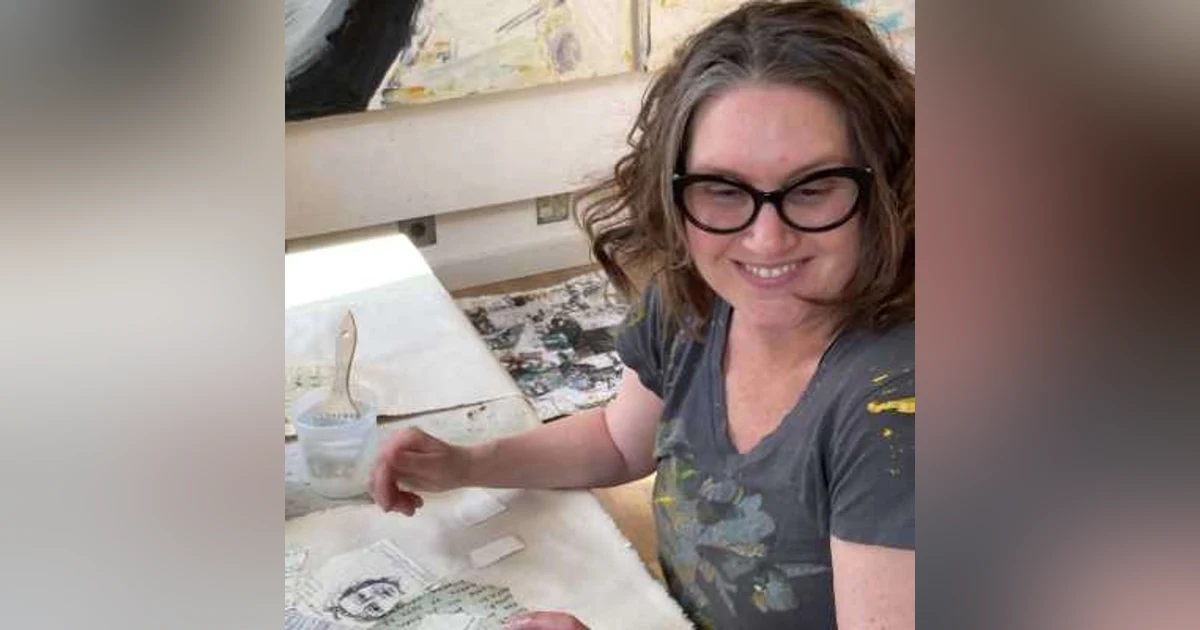

Send us Fan Mail Send us Fan Mail In this insightful episode of Living the Dream with Curveball, we are joined by Devorah Brinckerhoff, a talented artist with over 30 years of experience whose work spans across the United States and beyond. Devorah introduces us to her innovative healing practice, *Soul Portraits*, a mixed media approach that utilizes personal collections to transform trauma into art. She discusses her journey from gallery artist to healer and how her own experiences with tra...


 RSS Feed
Key Takeaways
- Devorah Brinckerhoff introduces 'Soul Portraits,' a mixed media healing practice that utilizes personal collections to transform trauma into art.
- Creativity acts as a bridge between individuals and their stories, allowing people to separate themselves from their experiences and foster self-acceptance.
- Traditional talk therapy provides intellectual awareness, but creative practices help release pre-verbal trauma locked deep within the somatic memory of the body.
- Objects and personal items hold the energy of those who interacted with them, which can be harnessed and redirected during the creative healing process.
- Everyone has access to creative healing because drawing and art-making are rooted in natural childhood play rather than rigid perfectionism.
Send us Fan Mail
In this insightful episode of Living the Dream with Curveball, we are joined by Devorah Brinckerhoff, a talented artist with over 30 years of experience whose work spans across the United States and beyond. Devorah introduces us to her innovative healing practice, *Soul Portraits*, a mixed media approach that utilizes personal collections to transform trauma into art. She discusses her journey from gallery artist to healer and how her own experiences with trauma inspired her to help others find their voice through creativity.
Devorah shares the profound impact that art has had on her life, revealing how her artwork acted as a mirror to her suppressed emotions and experiences. She emphasizes the importance of creativity as a tool for self-discovery and healing, illustrating how it can bridge the gap between individuals and their stories. Listeners will learn about the significance of acknowledging and expressing emotions, and how the creative process can facilitate healing and empowerment.
What You’ll Learn in This Episode:
- The concept of Soul Portraits and how they aid in healing trauma
- The relationship between creativity and emotional expression
- Insights into how personal stories shape our perceptions of self
- The difference between traditional therapy and creative healing practices
- Practical steps to begin your own creative healing journey
Join us for a deep dive into the transformative power of art and how it can lead to self-acceptance and resilience. For more information about Devorah Brinckerhoff and her work, visit her on social media and explore her offerings in online coaching and workshops.
Frequently Asked Questions
What are Soul Portraits?
Soul Portraits are a mixed media healing practice created by Devorah Brinckerhoff that uses personal collections, letters, and photographs to transform past pain and trauma into art.
How does art help heal trauma?
Art provides a visual language that bypasses mental defenses and acts as a buffer, allowing individuals to witness and release stuck emotions without collapsing into them.
What is the difference between therapy and creative healing?
While traditional therapy provides cognitive awareness and understanding, creative healing reaches pre-verbal trauma stored directly in the physical body through visual and somatic expression.
What if I am not artistic or creative?
Devorah Brinckerhoff explains that everyone knows how to draw and create through basic play, such as doodling, scribbling, or collage work, regardless of skill level.
Welcome to the Living the Dream Podcast with Curveball. If you believe, you can achieve. Welcome to the Live in the Dream with Curveball Podcast, a show where I interview guests that teach, motivate, and inspire. Today, I am joined by Devorah Brinkerhoff. She is an artist for 30 years and she has worked all across the United States and also in private collections across the world. Devorah, to process her own trauma and pain, created Soul Portraits, which is a mixed media healing practice that uses personal collections to transform and heal past pain. And she works out of her organ studio. And she also does some online coaching for those out there who want to use creativity to help heal trauma. So we're going to be talking to Devore about her work. And uh sounds like she's a worldwide artist, and uh we're gonna be talking to her about everything that she's up to and gonna be up to. So, Devora, welcome to the show.
SPEAKER_00Thanks for having me, Curtis. I'm happy to be here.
SPEAKER_01Why don't you start off by telling everybody a little bit about yourself?
SPEAKER_00Well, um, like you said, I'm an artist. I have been for really the majority of my life. I was more comfortable drawing and painting than reading and writing. I uh I believe that creativity for me and for many others is a great tool for self-connection and really learning how to listen to what lives inside of you and find your own answers.
SPEAKER_01Well, walk us through the process of going from gallery artist to hell, or you, you know, uh what shifted in your life and what made you realize that this is something that you want to want to do.
SPEAKER_00That's a great question. Um, my artwork was always leading me back towards myself. So I didn't know that I had a trauma history. I just knew that I was very unhappy and I didn't understand why. So I just thought that uh there was something wrong with me. And when I when I discovered my own history, I was uh 32 years old. And and it started like the pieces started to bubble to the surface. And when I looked back at my artwork, my paintings and drawings and the things that I made were revealing truths about what my body had experienced, but my mind had suppressed, and they were eerily accurate. Um, so when my mind finally caught up, there was all this evidence that those answers had already been known to me, known inside, and that creativity was the tool or the vehicle that allowed me to uncover it and uncover it in such a gentle way. So even though I had been in galleries for a long time, I really enjoyed it when I would meet somebody who was curious and interested and open and willing to have a transparent, deep conversation about what was going on in their lives. And that I knew that creativity could bring people together and share those stories. So it wasn't that I didn't like working with galleries. I did. I just wanted more contact with the people who resonated with the work that I was making. And then I really wanted to expand on what the actual how the creative process allows people to not only understand themselves at a deeper, more authentic level, but also connect with others, that artwork and creativity could be the bridge between people, communities, nations, like the whole nine yards.
SPEAKER_01Well, talk about um why uh own stories keep us in prison and why creativity is the key to freedom.
SPEAKER_00So the so we all experience trauma. I don't know that everybody would say that they would identify as having trauma. I I can't answer that, but but it's the it's not so much what happened, it's the meaning we made from what has happened. And inside of that is a lot of distortion and misunderstanding. And so I have a sexual abuse history, and that led me to feel shameful. It led me to feel guilty, it led me to feel uh like worthless. And and when I was growing up and a young adult, like I didn't know why. But the fallout of trauma is what caused so much problem, not the actual event itself or events, right? So it's the it's the meaning that we make, especially when we don't have any other skills, and so many children have so many difficult experiences that the meaning that they make from it is usually about themselves, like I am bad, or it's my fault. And so you can ask anybody who has been a victim of a traumatic experience and ask them like how they how it changed how they felt about themselves, and that creativity was such a for me, such a gentle way to honor what had happened. Like I didn't even know I was doing it until I was I was in my late 30s, um, how it had helped me. And and so adding the intention when I guide other people to to really witness the meaning that they made because of an experience rather than I am my experience. So it's the creativity allows the separation between the human who had the experience and the experience itself. Does that make sense?
SPEAKER_01Absolutely. It makes perfect sense. Well, talk about the difference between processing trauma through therapy versus transforming it through creativity.
SPEAKER_00So they both do wonderful things, and I am a non-verbal person, like I'm talking with you now, but my trauma was really locked in my body. I did not have words for it, I didn't have a story or memories that could go with what had happened. And so it's a very somatic experience of letting go, of releasing what was locked in there. So therapy only got me so far. It gave me awareness, it gave me some understanding, which is very, very helpful, but it didn't get to the root of what was living inside. My trauma, and I think for a lot of people who have pre-verbal trauma, it speaks in a different language, and you want to reach that language of the body. And for me, that was a visual language. So I was really curious about what it what does shame literally look like? What does tension look like on on the page? What does guilt look like? What does regret or despair? So all of our emotions are invisible, all of our thoughts and feelings and beliefs are invisible. And way back in art school, when I would draw the model, I I got really curious about what it felt like in their body to hold a pose for that long with an you know, an exaggerated twist in their spine or a hip jutting out, or or and to hold that, if you even were to stand on one leg for even three minutes, you would start to feel an ache in your own body and where the weight is held. And I got very curious about what that would actually look like, represented in a drawing. And so as I got older, I liked to put the intention of what does an emotion look like on the page as a way to separate from that emotion. And when you do, you start you start accessing and releasing some of the stuck energy that's associated with the experiences that you've had. Um, it's just so easy to confuse who we are with how we feel. And and that's that can often cause a problem, especially when we live in a society that says, here are all these negative emotions, and you need to stay away from them because they're bad, and you're gonna bring your vibe down and you're gonna stop manifesting, right? We have this society that says, stay positive and be happy. But what happens when you're really struggling with anxiety and depression and grief and loss or shame and guilt? Like those things need to be addressed and addressed in a way that is inviting curiosity, compassion, kindness, so that you can see what's on the other side of shame and the other side of grief and loss. Like everything has an equal and opposite end. So if we don't investigate, if we don't investigate shame, then we don't really understand our goodness. So I get really curious when people have heavy, heavy emotions because there's always a gift inside.
SPEAKER_01Absolutely. Well, explain how objects hold the energy of everyone who has interacted with them, and uh explain the importance of this idea when creating a soul portrait.
SPEAKER_00So I I have always believed that everything is energy and everything has energy, and that when you hold a rock, you're exchanging energy with that rock, and the and you're getting some of the energy from the rock, and the rock is getting some energy from you. And you know, I I loved thinking about church pews, and I lived in Europe for a while, and the history of the buildings and the walls, and I was just like, how many conversations have these walls been witnessed to over the years? And what is the energy in the walls, and how much have they seen and held? Um, so when you have a photograph of yourself that's meaningful to you, meaningful enough that you've kept it, or meaningful enough that you've tossed it, there's energy in that. And so when I was really, really grieving and I didn't know what to do with my own broken heart, I I was feeling, I was feeling at such a crossroads and really contemplating like, what does it mean to have people that I love and care about think so poorly of me, like so poorly that they they formally kicked me out of the family. And so that rejection, that abandonment, that betrayal made me feel like my worst fears were true, that I was unlovable, that I was unforgivable. And so at the point, at that point, I got like I was so miserable that I really didn't have anything else to lose. So I I opened this box that had all of these love letters and hate letters and photographs and journals and drawings and just the things that I had kept from a very young age all the way up to the present day that included notes from my husband and sweet little drawings from my children at the time. And I was like, oh, there's so much energy of different versions of myself across time. And and I started ripping them up and gluing them onto a canvas. And over the course of an afternoon, I realized that I was um disassembling and reassembling my own story, that I was changing my relationship to my past. And I was uh I was able to understand that the people I loved are allowed to feel however they feel about me. But I I get to choose what I feel about me. And when I was engaging with those materials, I was engaging with the energy of who everyone was, the person who wrote me the letter, who I was when I received a letter, etc. Like recipes handed down, like the whole nine yards. Um, but that ultimately I it was a choice, right? I got to decide what I believed about myself. And and the more I worked in this way, the more I understood that that my own decision, my own truth was what mattered, and that I knew that I had been honest. I knew that I had spoken what was real and authentic to me. And even if that cost me relationships with those that I loved, I felt like I was in integrity with myself. And it and that devastation led me to discovering like really deep unconditional love for myself. And it freed up those people that I had been counting on to love me and accept me and agree with me and understand me and say what I wanted them to say, right? It freed them up to do what they needed to do, and and it allowed me to take my own well-being back into my own hands. And so while that was one of the worst days of my life, it was also one of the best days of my life because I realized that I had agency and that I had power. And over the next five years, I just kept doing this and working through all of those materials as a way to rewrite the energy of who I had been so that I could free up a lot of space and step into who I really am and what I'm what I'm what my potential is rather than what the story is.
SPEAKER_01Well, tell us about a time when when someone's self-portrait reveals something about themselves that they didn't expect and talk about how this process uh bypasses our mental defenses.
SPEAKER_00Yeah. So when you're creating one for yourself, right, you're you're giving your mind a task to focus on so it doesn't get in the way as much. So the actual activity of making, whether you're cooking dinner or planting a garden or making a soul portrait or a drawing, you're you're distracting your mind so that you can be in connection, which with what I like to call your higher self or your own divinity. And and it switches the channel from that thinking mind and into your wisdom where you can have a conversation with your higher self or your essence and learn things that you wouldn't otherwise allow yourself to know, right? We get so stuck in fear or looping thoughts or intrusive thoughts or critical thinking or or the limiting beliefs, right? They're there, they can be a pattern and a habit. And so the making really disrupts that habit. Uh, in terms of what people have discovered about themselves, like it can be an emotion where they they come in thinking that they're going to feel really sad and despondent. And instead, what they noticed is that they're really angry, and it feels so good to be in touch with the anger and that there's curiosity. Um, and the thing that people report over and over again isn't so much something that surprised them per se, but that they expected, I guess the surprise is that they expect to feel bad, even if they they run into an emotion that we typically consider as bad or hard, that there's a lot of relief in actually letting yourself feel it and feel it in this way that's at a distance because you're creating at the same time. So when you're creating at the same time, you're not in the feeling, you're the observer of the feeling, that the creating is the separation. It is the buffer between the emotion and becoming the emotion. So you're really witnessing what lives inside of you without merging or collapsing into what lives inside of you. And that's the thing that people are really surprised by is that they thought they would be really upset and they're not. And then and then they feel like, wow, I thought this was going to be so scary. I I was really scared, and now I'm so relieved I can do hard things. I'm resilient, I'm strong, let's do it again. And so that people start to feel empowered with how to meet the emotions that they typically avoid.
SPEAKER_01Well, um, what would you say to someone who doesn't feel like they're creative or artistic enough? And and why do you feel like everybody has access to this type of healing?
SPEAKER_00Yeah, I love that that objection that people have because everyone knows how to draw, right? We come in knowing how to draw, we we draw with sticks and sand, we draw with, you know, crayons and make stick figures or squiggles or circles, like that is drawing. And so the idea that they don't know how to draw is just false. But most children learned at a very early age that whatever it is that they drew wasn't quote unquote good enough. And so they shut that part of themselves down, especially because when kids are drawing, there they love what they draw. They it's a very, it's such a vulnerable thing because they love it so much. And so if they love something and they take their drawing to a parent or a caregiver and the the that person receives it with criticism, it's very hurtful and and it leaves a big impression. And that that false belief that I can't do this is born. And so any two-year-old can do the process, right? If you have, if you can rip up paper and use your fingers to or a brush to put glue on a page and um place your paper on the in the glue, then you're good to go, right? And and nothing has to look like anything. It's really about the process, not about the product. It's about self-expression in a very honest and authentic way. And your system, your nervous system responds to that and says, Oh, I can finally calm down. I'm allowed to just be here with my emotions as a witness. And this person, the who's who's creating, becomes safe like a vessel, that your nervous system is like, oh, my person, my human is is safe now. I can show up, I can express, I can allow this inside part of me outside of me. And there's a lot of freedom and safety in that.
SPEAKER_01Well, how can someone begin using healing for great creativity for healing, even if they don't work with you directly?
SPEAKER_00Well, I love it. So um I always suggest for people to look up neurographic drawings. They're really easy to do. Uh, I have my own special sauce with them where I use a stone and and really give them each line an intention of to express an emotion because I believe that the line then holds the energy of that emotion, literally getting it out of your body and putting it on the page, not just so you can see it. But so you can change your relationship to it again as the witness. But when people just want to start, or if they have trouble with just a free squiggle or a scribble on a page, um, they can use an object and follow an object around to create a line. But really, it's it's that like scribbling, doodling, mark making, uh, pattern creating mandalas. Um, that's visual, right? Creativity comes, it's everywhere. We don't notice it in everyday life, but when you make a cup of coffee, you're in a creative process, right? When you make dinner, especially when you're just using what's in your fridge, you're being creative. You on this podcast are being creative. Like we're creative all day, every day, all day long. We just don't acknowledge or have awareness around that creativity. A conversation is creativity, writing is creativity, like it's it's everywhere. So depending on what you're comfortable with, where you feel excited. If you think back to the way you played as a child, was it with Legos? Was it with drawing? Were you into making forts? Like your play as a child is typically your creative language. And I just recommend that people get return to that place of play as a way, as a way to to connect with themselves. And um, and then if you add the intention, like whatever that play language is, to add the intention of expressing a circumstance or a limiting belief that you're struggling with, just as a way to see what it has to say, the energy of it as separate from you.
SPEAKER_01Well, talk to the listeners about your online uh coaching practice, you know, tell us about it, tell us what we can expect if someone chooses to work with you.
SPEAKER_00So when people choose to work with me, I draw their lines for them. I draw a lifeline, I draw lines of several different emotions, and I also um draw the shapes of those same emotions. I follow my intuition and really it becomes a conversation between whomever I'm working with and their higher self. And I'm the tool that the sort of reading comes through. I'm not psychic, but I've learned over the years that the drawings have a way of speaking that I understand. So I bring all of my 30 years to the table and talk about composition, color theory, line shape, form, um, tension, and negative space, like the things that go into a drawing and everything is for that person. It's about that person. So the the colors that get picked are really being picked by the energy of the person I'm working with. And then we can have a conversation about the different things that they're struggling with, about the let's say they've had a traumatic divorce and um they feel betrayed and like their life is a failure because the relationship didn't work out. And so we really go into the emotions associated with the lived experience that they have and we untangle them. And it ends up looking pretty tangled on the page, but that inside of them, that their the chaos has really turned into calm, that all of our emotions live inside and they talk with one another, but they don't want to get stuck. They really want to be able to move and not have us over-identify with any of them. So we may really want to feel happy and joyful and peaceful, of course, but in order to do that, we need to accept and allow everything that lives inside. So when we do, we really we claim our wholeness. So I there hasn't been a person or story that I have heard or met that I feel needs anything other than love and acceptance, kindness and compassion. And so that's always the lens that I will that I'll meet people with. And I've worked with all kinds of people who have done what our society thinks of as truly atrocious things. And by the time they come to me, there's such a desire for healing and for self-forgiveness and accountability. And I'm just gonna meet that with such tenderness, right? That that when we blame and scold and punish people, they just it it's a vicious cycle that builds on itself. And I also work with people who are survivors of of atrocious things that people have done and feel so terribly about themselves that they want to give up on their own value. And so really when you when you give unworthiness a line, you're you're creating that separation and and can meet the feeling without mistaking yourself for it. So it I really say the same thing to to everyone that that it all exists inside of you, and that our job as a human being is to show up with an open heart and curiosity and to witness what wants to be known and what wants to be heard, and to allow it to be seen and heard and listened to and learned from. And when we do, we really shift our relationship with ourselves and then with others.
SPEAKER_01Well, tell us about any upcoming projects that you're working on that listeners need to be aware of.
SPEAKER_00Well, I don't, um, I have a a soul portrait course that's always available. I run um workshops that people can book me for, and I do one-on-one sessions and bundles with people where I meet with them one-on-one and create a drawing for them. And depending on what their needs are, send them, send them the original so that they have the energy that's inside their drawing and a reminder of their of their courage and their power and and and to really return them back to themselves. Because I want people to feel empowered, like they don't need me, that they can rely on themselves. But in the beginning, when you're when you're just starting to hold space for what you what the emotions that live inside, it can be helpful to have support and a guide and and that practice of meeting things with gentleness rather than criticism. Like we're so critical of ourselves. And and how do you walk away from the self-criticism in favor of self-acceptance? Uh, it's a practice.
SPEAKER_01Well, so people can choose to work with you, check out everything that you're up to, though that's your contact info.
SPEAKER_00Yeah, um, I'm on uh Instagram and TikTok and Facebook. And if they can, there's an email that's associated with soul portraits, so they can email me directly too, just to learn more about what I do and how I how I work with people. I'm I'm happy to answer questions and I offer a a free uh connection call if people are curious about about what I do and like the the neurographic drawings are different than the soul portrait process, which is different than um just straight up drawing and painting and sew and collage work. Like there's there are just so many different options, and I really want people to do the one that they're the most excited about that they can get, they can get as much out of it. They have to choose the one that feels most aligned for them. So, and then I can meet them wherever that is.
SPEAKER_01All right. We'll close this up with some final thoughts. Maybe if that was something I forgot to talk about that you would like to touch on, or any final thoughts you have for the listeners.
SPEAKER_00Well, let's see. I I get really excited because I want people to know that their emotions aren't aren't meant to be scary, right? That that it's so important to be able to accept everything that we that we deal with. And it's so easy to forget that we're not we are not the hard things that happen, that we're bigger than any experience that we have, and that there's hope and possibility inside of grief and loss and and the difficulties that we run across, right? The curveballs, the things that knock us over or throw us off our off kilter, that we can come back from it and stronger because of it.
SPEAKER_01All right, ladies and gentlemen. Uh, if you are somebody else you know, uh needs some healing through creativity, please contact Deborah and check out her Soul Portraits course and everything that she's up to. Follow rate review, share this episode to as many people as possible. Also to keep up with all things, live in the dream. Learn when we release a new episode and all that good stuff, and everything that's going on, and have a chance to leave us a review, follow us, rate us, all that good stuff. The website to do that is www.curveball337.com. Share that website and show to everybody that you know. Thank you for listening and supporting the show. And Devorah, thank you for all that you do, and thank you for joining me.
SPEAKER_00My pleasure, Curtis. It's really nice to meet you and and talk.
SPEAKER_01For more information on the Living the Dream with Curveball Podcast, visit www.curveball337.com. Until next time, keep living the dream.