From Pulpit to Pursuit: Eric Robinson's Journey Through Faith and FBI
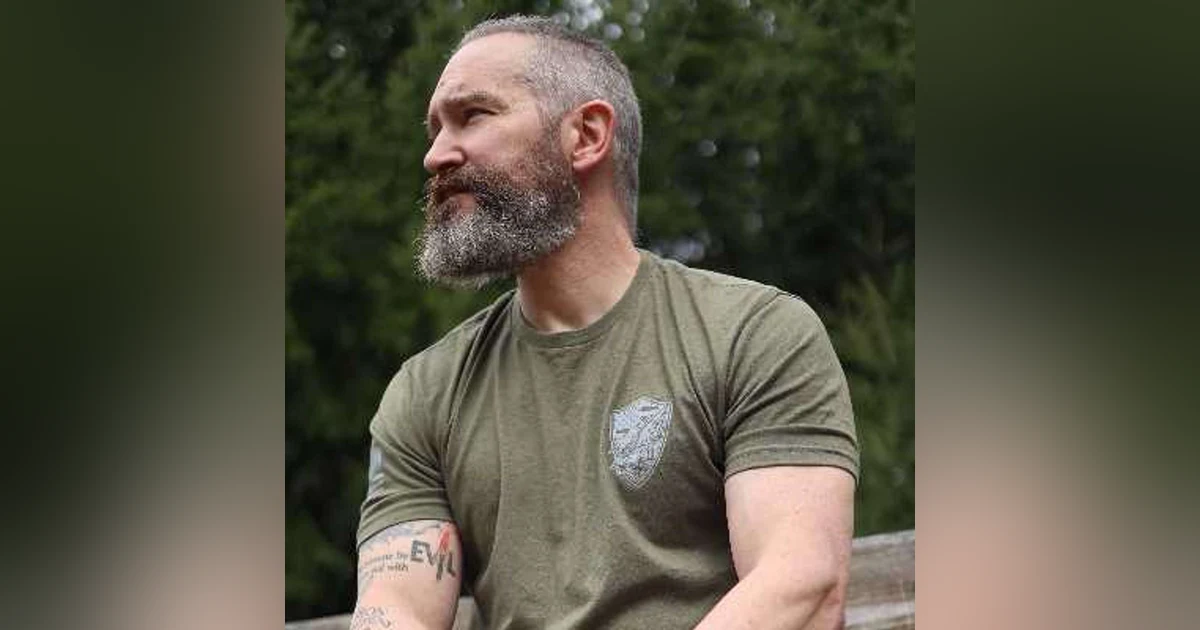

Send us Fan Mail Send us Fan Mail In this riveting episode of Living the Dream with Curveball, we sit down with Eric Robinson, a former FBI agent and author, who shares his extraordinary journey from being a Baptist pastor to a dedicated law enforcement officer. With 24 years of experience in the FBI, Eric has seen it all—from working as a SWAT operator to tackling complex cases involving white-collar crime, counterterrorism, and crimes against children. Eric opens up about the unique qualiti...


 RSS Feed
 Key Takeaways
- Eric Robinson transitioned from serving as a Baptist pastor for 12 years to spending 24 years as a special agent and SWAT operator in the FBI.
- One of the most crucial skills for a successful FBI agent is the ability to listen, connect, and build rapport with people from all walks of life.
- Robinson worked on high-profile investigations, including an award-winning civil rights case regarding Chicago Police Commander John Burge and multi-faceted counterterrorism operations in Ohio.
- His upcoming book, *Irreverent: From Saving Souls to Chasing Sinners in the FBI*, details his remarkable career transition and features contributions from his wife.
- Listeners can stay updated on Eric Robinson's book release and upcoming projects by visiting his official website at www.preachertobreacher.com.
Send us Fan Mail
In this riveting episode of Living the Dream with Curveball, we sit down with Eric Robinson, a former FBI agent and author, who shares his extraordinary journey from being a Baptist pastor to a dedicated law enforcement officer. With 24 years of experience in the FBI, Eric has seen it all—from working as a SWAT operator to tackling complex cases involving white-collar crime, counterterrorism, and crimes against children.
Eric opens up about the unique qualities that make a successful FBI agent, emphasizing the importance of listening and connecting with people, regardless of their background. He shares gripping stories from his career, including encounters with gang members, teenage prostitutes, and the harrowing realities of working in high-stakes situations.
Listeners will be captivated by Eric's insights into the challenges and triumphs of his career, including his involvement in significant investigations that shaped civil rights in Chicago. He reflects on the evolution of leadership within the FBI and recounts intense moments when his life was on the line, highlighting the importance of teamwork and negotiation in crisis situations.
As Eric prepares to release his first book, *Irreverent: From Saving Souls to Chasing Sinners in the FBI*, he gives us a sneak peek into its content and the inspiration behind it. The book chronicles his remarkable transition from ministry to the FBI, offering relatable stories that showcase the human side of law enforcement.
Join us for an enlightening conversation that not only sheds light on the realities of working in the FBI but also inspires listeners to pursue their passions and make a difference in their communities. Eric's journey is a testament to resilience, dedication, and the power of service.
What You’ll Learn in This Episode:
- The essential qualities needed to be an effective FBI agent
- Gripping stories from Eric's time in the FBI, including unique cases and experiences
- Insights into the evolution of FBI leadership and its impact on operations
- The inspiration behind Eric's upcoming book and what readers can expect
- The importance of community engagement and making a positive impact
For more information about Eric Robinson and to stay updated on his work, visit www.preachertobreacher.com and be sure to check out his book when it releases in October.
Frequently Asked Questions
Who is Eric Robinson?
Eric Robinson is a retired FBI agent with 24 years of experience who previously served as a Baptist pastor before joining the bureau.
What is Eric Robinson's book called?
His upcoming book is titled *Irreverent: From Saving Souls to Chasing Sinners in the FBI*, scheduled for release in October.
What roles did Eric Robinson hold during his time in the FBI?
During his career, Robinson worked as a SWAT operator, firearms and tactics instructor, and investigated cases involving white-collar crime, counterterrorism, crimes against children, and public corruption.
Where can I find more information about Eric Robinson?
You can find more information about his work and upcoming book by visiting his website, www.preachertobreacher.com.
Welcome to the Living the Dream Podcast with Curveball. If you believe, you can achieve.
SPEAKER_01Welcome to the Living the Dream with Curveball Podcast. A show where I interview guests that teach, motivate, and inspire. Today's guest is Arthur Eric Robertson. Eric spent 24 years in the Federal Bureau of Investigation. He's previously retired and getting ready to release his first book. Eric worked as a SWAT operator, firearm, and tactics instructor. And he also worked various crimes such as white collar, counterterrorism, crimes against children, gang, drugs, and public corruption. So we're going to be talking to Eric about his book and his career. Everything that he's up to and gonna be up to. So Eric, welcome to the show.
SPEAKER_02Thank you very much, Curveball. I appreciate you having me on.
SPEAKER_01Absolutely. Glad to have you. Why don't you start off by telling everybody a little bit about yourself?
SPEAKER_02Well, I feel like you you buried uh the lead on that. Uh I had a wonderful career, just a few months retired in the FBI. And just before getting into the FBI, I was a Baptist pastor. So I spent uh 12 years in Christian ministry until I was pastoring a Baptist church in Western New York. And one day in April of 2002, I preached my last sermon on Easter Sunday at my church. The next Sunday, I was in Quantico, Virginia to attend the FBI Academy. And then the Sunday after that, I was preaching in the FBI Academy because they didn't have a chaplain and they needed somebody to fill in. And that's how my career started.
SPEAKER_01Well, talk to the listeners about the unique qualities it takes to become an FBI agent if anybody's out there looking to do that.
SPEAKER_02Oh, I I I cannot uh tout the FBI highly enough. It was a great organization full of very competent, well-meaning, good-intentioned people. I enjoyed my time there and got to meet some of the best people ever. And to when I joined the FBI, there were some uh military candidates, uh, former law enforcement, a few people who were coming from a support position in the FBI to become an agent. And while many of these people had an understanding of law enforcement, I didn't. One of the advantages I had was for those years prior, I was learning about people and how to have conversations. So as a pastor, I would have to listen, I would have to draw people out, find ways to connect with them, uh, find curiosity and openness for what they had to share without being judgmental. So while I was still learning how to be a law enforcement officer, the one advantage that I did have, which is, to your question, something really necessary to be a good FBI agent, is that ability to listen to people. Because no matter what technology we have or computers or judicial process, eventually agents have to talk to people and make some connection there, whether it's informants or victims or even the criminals.
SPEAKER_01Well, talk about some of the craziest things that you saw while working in the FBI.
SPEAKER_02Oh, so I when I was a pastor, I would have discussions with my dad, who worked as a truck driver for his career, and he would tell me that I was insulated, that I didn't understand the real world because I was dealing with a homogeneous unit, the people who are coming from a similar area, similar class structure. And it wasn't until I got in the FBI that I realized, and my dad was right. So I went from you know, working with well-intentioned people, with uh people in my congregation who pretty much looked like me and and were like me, to then suddenly being in places I never could have imagined. So that would be talking to gang members in Chicago, where of course I would not otherwise be sitting down with them, uh talking to teenage prostitutes and trying to build rapport with them. Um one time I was out with my partner and we're we were driving a 15-year-old girl around who was engaged in sex work, and we're trying to get her to show us some of the houses where she had met with customers, and I'm trying to build a relationship with her, get her to trust us. And she says out of the blue, I you know, I really could use a cigarette. And uh I told her I I don't have any cigarettes, but I do have cigars if you'd like one. And so while my partner was looking at me kind of side-eyed, here I was sitting in a parking lot with a 15-year-old prostitute smoking cigars while she's telling me about her uh uh experiences in prostitution. So that's an image I never thought I was gonna have uh in my life, but I found many instances like that where I was in unexpected places.
SPEAKER_01What can you reflect on current events from the perspective of a former agent?
SPEAKER_02Yeah, uh when I came in, uh Robert Mueller was the director, and Robert Mueller was uh a very boring person. He uh got the work done, didn't seem to care greatly to interact with agents, and that was fine. He wasn't a distraction at all. Uh later, Jim Comey took over as the FBI director, and then he seemed to be a little more uh caring for the agents and and the FBI population, and I like that. At the same time, he also seemed to be a little uh too camera friendly, like wanting to be in front of cameras. Then Chris Ray took over from there, and he seemed to be a great blend of the two of just being business-like, but also getting in front of the cameras when he needed to to defend the FBI. So I I got to see some of the different aspects of how the FBI is being led. And uh that was always refreshing to have people leading the FBI who weren't causing scenes, commotions, or drawing attention to themselves. And unfortunately, that's not the uh the leadership we have right now, where much of the attention is going to those leading rather than just the work that we're doing.
SPEAKER_01Tell the lessons an inside story from an award-winning investigation.
SPEAKER_02Well, uh so I worked two cases throughout my career that were awarded the Attorney General's award, which is pretty prestigious. And uh I was just fortunate to be a part of it. It wasn't anything special I did. But one of the cases that we got to work was fairly significant. So it had an impact on the civil rights outlook in the city of Chicago. My buddy Jake had a case going on Chicago police commander John Burge, who through the 70s and 80s, he and his team had regularly uh tortured subjects in order to get confessions, and those victims were almost exclusively black males. So uh he was getting results, his team was getting results, and because of that, the Chicago Police Department just uh dismissed allegations and let him continue. And so for years that went on until finally he was let go and retired. Uh and then we picked up this case uh 25 years after the fact, and much in the style of Elliott Ness trying to catch Al Capone, rather than actually bringing some civil rights case against John Burge, we were forced to uh find a way to get him charged. And that came when he was sued civilly in federal court by one of the victims. And during that civil suit, in his testimony, he stated that he had no knowledge of any torture or abuse that went on under his command. And so because of that, he reopened an opportunity for us to charge him with perjury and obstruction of justice because he hadn't lied under oath. And if we could prove that he had tortured people, then we could charge him with that. So we were we're coming up against the statute of limitations just for that, and we were forced to uh we we couldn't subpoena phone records because they were useless and long gone. Bank records had no value, we couldn't do fingerprints or anything. We were solely working this case just through interviews, and we were interviewing people on events that took place 10, 15, 25 years prior. And we talked to a lot of the victims too, and these victims were now older men who had already spent their time in prison, and they would tell some harrowing stories of Burge and his men uh putting typewriter bags over their heads to suffocate them, hitting them with telephone books. There was uh a long-held story that was repeated often that Burge, who had served in Vietnam, had a crank telephone where when you cranked it, it created an electrical charge in order to use a telephone. But in this case, he had put alligator clips to it and would clip them to the men's genitals and shock them until they confessed. And I had one man that I spoke with who told me of how Burge and his men had taken him under a bridge where they could have seclusion. He was handcuffed behind his back, and one of the detectives stood on the bumper of a vehicle and just lifted on his handcuffs until the man said he thought his shoulders were going to rip out, and then he confessed. But the difficulty for us was as we're talking to these victims, and they were victims, this man said, I confessed, and because of that, my mother died while I was in prison. I never had a chance to go to her funeral. And very curiously, I asked, So, did you confess to something you didn't do? And he said, No, I didn't. I I did it, but I never would have confessed. And so it was a it was a balance here where we're working with people who were criminals. Largely they were ones who had done the crime that they're accused of. But the police shouldn't act like that. There should be justice. They these were rapists, arsonists, murders, and justice should come. But the way that Burge and the Chicago Police Department at that time handled these matters was wholly inappropriate. So, through talking to many of these men, we had worked up a case where years after the fact, there was some modicum of justice that came from this, where John Burge was charged with perjury and obstruction of justice. And we were able to go down to Tampa where he was living in retirement and finally put the handcuffs on him. And and it what what struck me when I handcuffed him was here was this man who had brought so much abuse and harm to people. And at 61, he seemed 20 years older than that. And he was he I he drank a lot too, so I'm sure that harmed his health. But uh doing that, the FBI, who had failed years before, finally stepped up and did at least something to resolve uh a matter that we should have addressed long previous.
SPEAKER_01Well, has there ever been a time where your life was in danger? And how did you manage dealing with the constant threats of working with the FBI?
SPEAKER_02Yeah, my life was in danger quite a bit. So uh being on the SWAT team, we were called to situations where the threat was uh increased. So we weren't doing anything that other agents weren't doing. It's just that we had some better equipment, uh, we had more consistent training, and we had uh ballistic rated vehicles that we could use for cover. And so whenever we were called to a more dangerous subject and we didn't know if he was going to oppose us with violence, those were often life-threatening situations. Most times the gentlemen just came out with their hands up because when you look out a window, you see that you're surrounded, and there's 15 men with rifles and lasers pointing through windows. Yeah, that show of force was actually much uh it brought much more safety to the situation because we took away their choices. There was just one choice, and that choice was to surrender because they weren't going to make it make it through us. And on one occasion, we were called uh out to Youngstown, Ohio. So I drove three hours across the state where a team had been set up, a local SWAT team had been set up on a barricaded subject. And it was a woman who was having a uh a mental break. And the night previous, officers were called because she was going around the apartment complex waving a gun at people. So when the officers knocked on her door, she responded to them, pointed the gun at them, and then locked the door. They retreated, and then the SWAT team was called to try to resolve the situation. We got there in the morning after that had gone on all night, and we were had cleared out the apartment building. We were set up in a room just down the hallway from her. And so we had coverage outside, and it was myself and seven under seven other operators in that small apartment ready to make an assault if need be. In that apartment was this woman and her 10-year-old son. And she was also live streaming most of the time, too, just saying some crazy things online. But in this case, our SWAT team was set up and we were working hand in glove with the negotiators, where we were set to make a move if we needed to, but until then, we were allowing the negotiators to try to do their job to talk the woman out. And our trigger to enter with force, if need be, was if she either threatened her son, which at this point she hadn't, she was just erratic, or if she fired a shot. So as the negotiators were doing their best to talk her through, and and she was claiming that we were not the police and that we were aliens taking on a form of police, she got angry and frustrated and at one point shot through the door at our robot that was used to talk closer to her. And I looked back at my team leader, thinking, that's a shot. Are we going in now? And she had previously said if anybody came in, they needed to bring body bags with them because she was going to kill us. And I remember thinking that I wasn't afraid, but this was probably gonna hurt, that going through that door, I might understand what it feels like to get shot. And fortunately for us, there was some discussion, and our team leaders decided she was just frustrated, she hadn't threatened her son yet. Let's see what goes on. And we retreated and just continue to try to negotiate. And that situation ended with us being relieved by another SWAT team. And as we walked to a nearby parking lot, having sat all day in the hot sun with all this gear on, peeling it off, we were a few hundred yards away and we heard two shots ring out. And five, ten minutes after we had been relieved, that other SWAT team had decided this had gone on too long, had tried to uh prompt her, push her, and were was banging her door with their robot. She responded by going out her back window, firing a shot at a sniper who returned fire and struck her in the face. So that was that was one time definitively where uh I remember thinking uh my life might be threatened for for real.
SPEAKER_01Wow, that's pretty crazy. Can you can you talk to the listeners about uh cases uh involving uh legitimate terrorists and people planning mass shootings?
SPEAKER_02Yeah. Um we had so I I was uh assigned in Chicago for my first eight years, and then for the final uh 16 years, I was in the Cleveland division, the in the Toledo satellite office. Toledo's where I had grown up. And I had worked criminal cases, some of those violations you mentioned, financial white collar, um, crimes against children, until I was moved to a national security counterterrorism squad. Great squad, wonderful people, some of the best people I know. But culminating together at once were the two biggest cases that our squad had ever had. Louie, who was a task force officer and a great investigator on our squad, he worked for the Toledo Police Department and is in the police hall of fame, wonderful guy, had worked up a case on two uh uh uh a man and a woman in their mid-20s who had uh that there was reporting that they were planning a mass shooting. And so Louie worked that case up and we executed what is referred to as a surreptitious search warrant. So if I were to um execute a search warrant on your residence, I would either show you the proof signed by a judge that we are legally here and either hand it to you, or if you're not there, I we would have to leave it on a table for as evidence that this is justified. A surreptitious search warrant means that we can break into someone's house and delay notification. We are purposefully sneaking in when they're not there, and the judge signs off to say, in this instance, I'm going to allow for you to delay notification until the case is complete. And so a team with plenty of surveillance done ahead of time to see pattern of life and when everybody would be out of the house, the team snuck in, broke in, imaged the computers, um, took pictures of multiple firearms, ammunition, bomb-making equipment. Um, they had idolized mass killers and were obsessed with this. So getting into computer, we could see the sites they were going to, of uh their Tumblr accounts talking about how much they uh admired mass shooters and killers. And we took that back now to work up a case on them where all obviously they were a threat, but we needed to have what's referred to as an overt act. So we got the overt act by introducing an undercover who asked one of them to purchase black powder to make a bomb so that they could be involved in an eco-terrorism event. So that happened. Now we had the probable cause to arrest them. Because the uh male subject was said to, he said he sleeps with a loaded shotgun by his bed. That was a a SWAT hit. And so we took them by force. Fortunately, they complied, everything was safe. And in events like this, the FBI doesn't have to wait to see if somebody's going to carry out the attack. We want to try to prevent it ahead of time. And in, and you never know if they're going to, you know, again, we don't want to wait until afterwards, but sometimes there's questions in the public of whether they would actually would do this. But the man involved in this during his interrogation was asked, Do you think you would have done it? And he says, Yeah, probably so. So they had been set up with the pipe bombs and their firearms to attack a nearby bar that they'd like to go to. And they had it all laid out where they would have, by their words, the greatest kill zone uh too, as people would rush out, that's where they would shoot them. So that arrest happened, and right on the heels of that, the following the following workday, we had an arrest on a young man named Damon Joseph. And Damon Joseph was so prolific online, pledging his allegiance to ISIS and wanting to kill Jewish people that we had multiple reports coming in about him. So he had started out as a Satanist, uh, became a Nazi because he hated Jewish people, and then decided that ISIS did a better job of killing Jewish people, and so he pledged to them. And he wasn't he wasn't a Muslim extremist who had grown up in Yemen or or Saudi Arabia. He was a white kid with a red hair who probably didn't travel more than 25 miles from his trailer park in Toledo, and yet he was pledging to ISIS. So we introduced an undercover to him. That undercover engaged with him online, and then they met in person. And keep in mind, we're juggling this other significant case at the same time working this one. So the undercover meets with him, and during that time, he just continues to spout about his desire to kill Jewish people. Uh, the undercover and the subject went to a Jewish synagogue where he was casing it and then telling his plans of how if he had a rifle, he would go inside, make sure he killed the rabbi, but you know, would mow down people as much as he could. And the undercover says, Do you need a rifle? He says, Yes. And he says, Well, I can get you one if you want. And so we procured a rifle to give to the subject. And that was going to be the overt act for him. So we're not going to give him a functioning rifle, of course, because just in case he has ammunition, we don't want him to pull that on the undercover. So we have an inoperable weapon, but even though I trust our people, I wanted to make doubly certain. And so I was tasked to take that weapon home. And I have a shooting range. Uh, I have a large yard, so I have a shooting range by my house, loaded the weapon and attempted to fire, and it didn't fire, so we were good. And that arrest was set up for the undercover to meet the subject, exchange the rifle to him, and then engage in small talk while we rushed in to arrest. But bad guys don't follow our plans. So as he, Damon Joseph, walked to meet with the undercover in a parking lot near near his trailer, he got in, took the weapon, and just left. And so we had four of us on the assault team in a van to pull up and jump out. One of the guys with a flashbang, which is a concussive grenade, ready to roll underneath the vehicle, which would have like completely stunned everyone. And he had to put that in his pouch because our subject was on the move. The van pulled up. First guy gets out to go make the arrest. And after he gets out, as soon as he jumps out, the driver decides he's not close enough. And so he got gunned the motor. And so the second guy gets out, his feet moving to catch up to the ground. I was number three. I Fred Flintstone my feet so I could stay upright. And then the fourth guy, my buddy Rob, just rolled right out of the side of the fan and it was a mess. And by the time we got to the scene, two other task force officers already had him on the ground at gunpoint, and that concluded safely. So a couple of cases like that, cases like that come up maybe once a year for a squad, and we had two in two days, just like that.
SPEAKER_01Wow. Talk to the lessons about your uh book that you got coming out. You know, tell us what inspired you to write it, uh, and what we can expect when we read it and where to get it.
SPEAKER_02Yeah. Uh so the book is entitled Irreverend, From Saving Souls to Chasing Sinners in the FBI. Comes out in October, and it's a story of a Baptist pastor who joins the FBI. And it's a series, it tells my story of where I came from and and how I made such a drastic career change from being someone with no law enforcement experience to being someone who got to do some remarkable things. And I think those who read the book will see uh I'm just a regular guy. Like I think people can read that and say, well, that's something I could have done too. I can imagine me being part of that because it's not fantastical, it's not how I infiltrated the mob, it's not how uh, you know, I did something amazing, repelling from helicopters, but it's part of what any FBI agent does. And yet I could get a buddy on the phone right now at random and say, tell me an amazing story, and he'd have many because these cases that we get to work involving people, involving some of these techniques, and and the victims involved, the the characters there are remarkable and they stand out. And nearing retirement, my wife nudged me and said, You should write a book. And I said, Great, let me try that. And those stories just came out. So as I go through the book, I tell my story of how I moved into the FBI, and then I'll then I go chapter by chapter to tell some of these stories, like the ones I'm I'm sharing with you, of this is an investigation that we had, and here's the crazy stuff that went on along the way. And then I follow up each chapter with an after-action review, which is common to law enforcement or military, where once we've completed an assignment, we sit down together and we ask, what did we do right? How did we screw up? What do we need to maintain? What can we do better? And so that is a story of here's a here's a remarkable investigation, here's something that's I think stands out, and then a review of this is why that worked, or this is how I almost screwed it up. And I tell stories about working with informants, and I tell stories about my time on SWAT, uh, stories of uh the victims I've interacted with, some of these young girls. Um, and and then I was very fortunate. I I, since my wife challenged me to write the book, I challenged her back and said, Hey, I'm I wrote about what it was like for me to go from ministry to the FBI. I want you to write about what it was like for you. So in the penultimate chapter, my wife writes about her experiences too. And then I do a little after action of of what she had just written, uh, of reviewing her statements. So uh I think it's I think it's a very accessible book, the kind of thing that people can relate to.
SPEAKER_01Absolutely. Well, besides your book, tell us about any other upcoming projects that you're working on that listeners need to be aware of.
SPEAKER_02Well, uh, they can follow me at my website, which is preacher to breacher.com, because I started out at in the pulpit, and then later I was the guy tasked to knocking down doors when it called for it. And uh right now I'm getting my book together, making these appearances so people can hear about some crazy stories. And uh it's the book is in the hands of the FBI at the moment because they have to review it first, and uh then we'll typeset it and go from there.
SPEAKER_01All right, we'll close us out with some final thoughts, maybe if that was something I forgot to talk about that you would like to touch on. A any final thoughts you have for the listeners?
SPEAKER_02Well, uh, my final thoughts are I I'll say a couple things. One is anyone interested in the FBI, highly recommend it. If there's any opportunity for someone to get in, it's a great place full of wonderful people. Uh I thought being in ministry was you know a place full of wonderful people. And then I found very dedicated folks in the FBI. So I I think that probably comes out in the book of my appreciation for many of my colleagues and my close buddies on the SWAT team. So uh I guess I'll just finish with a pitch to say good people join the FBI, bad people, uh, look out for the FBI.
SPEAKER_01Absolutely, ladies and gentlemen, and be on the lookout for that book coming out in October. And for more information and to keep up with everything that Eric is up to and gonna be up to, visit Preacher to Bleach to Breacher.com, preacher to Breacher.com and to keep up with all things living the dream, visit www.curveball337.com. Share this episode, the show, the website, to everybody that you know. Thank you for listening and supporting the show. And thank you for your service and FBI and thank you for joining me.
SPEAKER_02Thanks so much, Curtis.
SPEAKER_00For more information on the Living the Dream with Curveball Podcast, visit www.curveball337.com Until next time, keep living the dream.