
From Darkness to Light: Laura Bratton's Journey of Grit and Gratitude
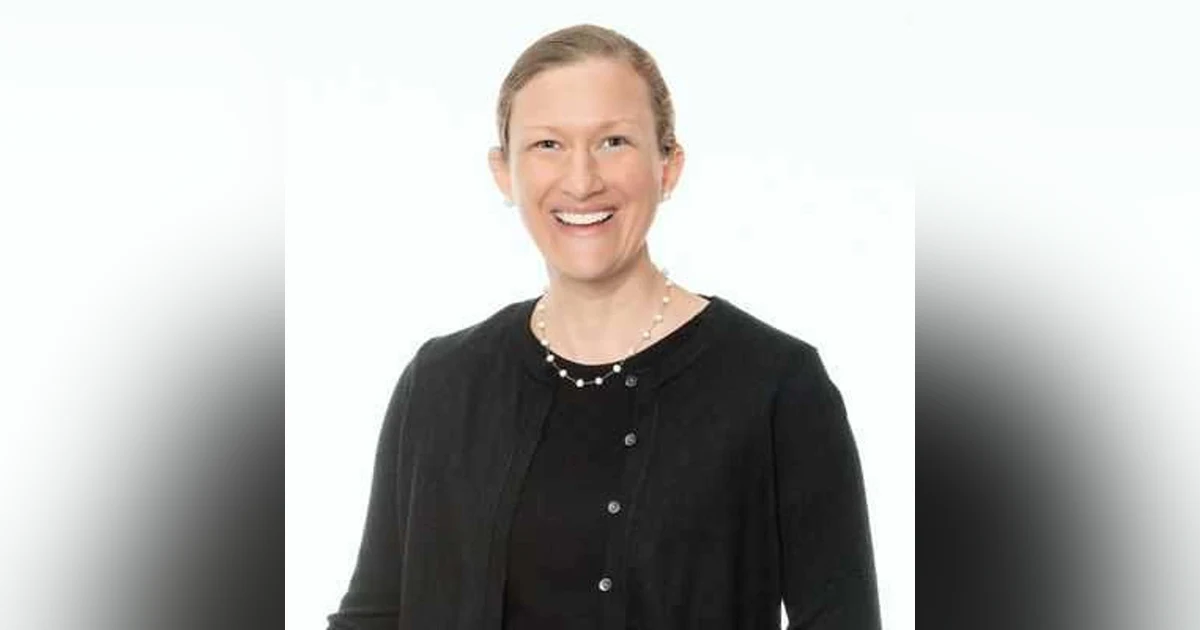

Send us a text What happens when life suddenly changes course and everything you know disappears? Laura Bratton's world transformed between second and third grade when a routine eye appointment revealed she would lose her sight due to a degenerative eye disease. While the full impact didn't hit immediately, by age fourteen, Laura found herself staring at indecipherable black blobs on her classroom board instead of letters—a moment that launched her into a profound journey through grief, anxie...


 RSS Feed
What happens when life suddenly changes course and everything you know disappears? Laura Bratton's world transformed between second and third grade when a routine eye appointment revealed she would lose her sight due to a degenerative eye disease. While the full impact didn't hit immediately, by age fourteen, Laura found herself staring at indecipherable black blobs on her classroom board instead of letters—a moment that launched her into a profound journey through grief, anxiety, and ultimately, transformation.
The path from "I can't" to "I can" wasn't straightforward or quick. Laura shares how the steadfast support of her family, especially her brother who refused to treat her differently, created a foundation of grit that eventually became her own. Meanwhile, a mentor's challenge to write down three things she was grateful for each day—initially met with skepticism—gradually revealed the power of noticing what helps us navigate difficult transitions rather than fixating on what we've lost.
These twin principles of grit and gratitude now form the core of Laura's work through UB Global, where she helps others facing major life transitions. Her book "Harnessing Courage" (named after both the physical harness she uses with her guide dog and the emotional process of gathering strength) offers these same strategies to readers worldwide. Laura's most powerful insight? The importance of balancing grief with forward movement—giving yourself permission to acknowledge difficulty while taking life one moment at a time rather than trying to solve everything at once. For anyone facing change, challenge, or unexpected loss, Laura's message offers both compassion and a practical roadmap toward resilience.
Looking to transform your own approach to life's curveballs? Visit LauraBratton.com to explore her speaking, coaching, and writing—and discover how you might harness your own courage to move forward through whatever changes you face.
Want to be a guest on Living the Dream with Curveball? Send Curtis Jackson a message on PodMatch, here: https://www.podmatch.com/hostdetailpreview/1628631536976x919760049303001600
0:00 Welcome to the Living the Dream Podcast with Curveball, if you believe you can achieve. Welcome to the Living the Dream with Curveball Podcast, a show where I interview guests that teach, motivate and inspire. Where I interview guests that teach, motivate and inspire. Today, I am joined by author and founder of UB Global, laura Bratton. Laura lost her sight due to an eye disease at the age of nine and she founded UB Global, which is an organization that provides speech to people to help them overcome obstacles with grit and gratitude.
0:47 So we're going to be talking to Laura about everything that she's up to and what she's going to be up to. So, laura, thank you for taking time out of your busy schedule to join me. Absolutely, I'm excited. Why don't you start off by telling everybody a little bit about yourself? Why don't you start off by telling everybody a little bit about yourself? Yeah, so I faced the unique challenge. Of life was going well, life seemed to be normal, and then everything changed between the summer of second grade and third grade. So a situation that happened that encapsulates the whole experience I will still remember.
1:32 I can vividly see in my mind's eye. I was in the doctor's office, in the pediatric ophthalmologist, and I had read all the letters, the biggie and all the letters that you know the doctor, nurses, to ask you to read on the chart. My eyes were dilated and I just seemed the appointment was going fine and as the doctor came in and looked at each of my eyes, I can still see him. He just rolled back in his chair and he just looked directly at my mom and, very serious and obviously concerned, he said there is a major problem going on with her vision and it's something that I will refer her to a specialist, to that she needs to be seen by a retina specialist.
2:22 So my mom's immediate response was well, okay, you know I'm a teacher, I'm getting ready to start a new school year. Obviously she's in school getting ready to start a new academic year. We'll take care of it sometime in the fall or spring break, you know Christmas break or fall break or whatever. And he just looked back at her and, again very concerned, I'm gonna refer you and you're gonna leave my office and go directly to his office so that that one appointment started in a whole significant, life-changing experience well, walk through the walk, the listeners.
3:06 You know your mindset when you first, you know, began to become blind and through the grieving process of, you know, having to deal with the loss of your sight. Yeah. So the gift of being nine was that, even though I still can remember and feel the emotion of that day, that appointment, cognitively, as a nine-year-old I couldn't understand the depth of emotion. I couldn't understand the depth of the significance of what it meant that I eventually lose my sight, that the cells in my retina were dying and they knew I would lose my sight. They just didn't know at what rate.
3:47 And so that's why I say, as the gift, I couldn't really process what was going on as a nine year old, fast forward as a 14 year old. That's when I could process and that's when the intense grief process started, process, and that's when the intense grief process started. So what I mean by that is between nine and 14, my vision. It decreased some, but not significantly. So again I just thought okay, this is what my life's going to be. My vision is just not as good. Then in that end of middle school, there was one particular day I was sitting in geography class and the teacher said take out your notebooks and write down.
4:33 Start copying down the notes that I'm going to put up on the board. So I just grabbed my notebook, grabbed pen, looked up at the board and all I saw were these black like blobs. It wasn't clear defined letters. So I looked back down at my notebook, looked up at the board again and still all I saw was this kind of black, just random markings. Was this kind of black, just random markings? So, very confused of why I didn't see just regular print, I leaned over my neighbor and said well, how are you copying down the notes on the board?
5:14 You seem to be doing it with no problem. How are you writing down the notes? Are you just writing down words? And she just leaned back over to me and said Laura, the print is completely normal. What are you talking about? There's no issues writing down the notes on the board. So that's the moment I realized the reality of that doctor appointment, when I was nine. That's when I realized as a 14 year old okay, I had just lost a significant amount of vision and this is my new reality. So, just as you were asking about the grief process, that's when the grief started and my first step, my first fault, was that denial period.
6:07 Oh, this isn't that bad. Oh, my vision might come back really soon. This is not permanent, it just it was denying the reality. Once I was experienced that denial the grief was. The mindset was I can't, I can't, I can't, I don't have the strength, this is too hard, I can't, I can't, I can't. So that was my initial reaction to the major vision loss. As far as the grief emotional perspective is, this is too hard, I can't do this what talk to the listeners about how you use grit and gratitude to be able to move forward yeah.
6:54 So, as I was saying the whole time, so through high school, as I continued to lose a significant more amount of sites and I still was in that mindset, that intense grief of I can't which led to anxiety, to depression the whole time, that I am thinking I can't do this, this is too hard. Where the grit and gratitude comes in is not first the grit and gratitude of myself, it's that of the support and those around me. So I'll break it down into both parts. So the grit, what I mean by that is it was the grit of my parents who would tell me every day we don't know the future, we don't know how this is all going to work out.
7:44 We're going to take it day by day as a family and figure this out, figure out what resources are out there, how to live this new, this new life, this new normal. It was my brother, who's five years older. It was his grit of he didn't treat me any different all of a sudden. He didn't start babying me or pitying me or feeling sorry for me. He treated me no different than he'd always treated me. It's just like his annoying little younger baby sister that her job was to drive her big brother crazy. He didn't treat me any different.
8:27 My friends continue to be my friends, treat me any different. My friends continue to be my friends. They again, they didn't treat me any different just because I couldn't see as well. So, being surrounded by a community, by teachers, by parents, by a brother that continued to move forward and continued to just take it literally day by day, by day, that's what I mean by the grit. It was as they held that grit for me. My mindset slowly began to shift from I can't do this to oh OK, maybe I can do this for the next hour, maybe I can get through English class today and then Spanish class at the end of the day and then lunch during the day.
9:23 So it was that mindset of slowly changing from I can't to accepting and believing that grit within myself. And and I it was again, it was a. It was a slow process. It wasn't just I woke up one day and said, okay, now I have grit, now I believe in myself, now I have the strength, let's go forward. But it was a very slow process of just all these moments building up to finally accepting that grit for myself, and I can give countless examples of how that grit finally came to be.
10:05 But before I give those examples, just balance with that grit, what I experienced was the gratitude. And again, the gratitude was not me waking up and saying, oh, wow, I am just so grateful to now be blind, I am so grateful to be a teenager this different than I used to be. Rather, it was just the gratitude of what helped me navigate through each day, and the way I got there was again just like the grit.
10:46 It was that support around me that taught me the gratitude. So one day in high school, a mentor of mine said to me after school one day Laura, I want you to start writing down three things that you're grateful for, and every day, at the end of each day, I want you to reflect back on the day and just think about what are those three people or situations or events that you're thankful for. And immediately, as she told me this, thankfully I just kind of didn't, I just didn't really react. But in my mind I'm thinking I'm not sure you're a good mentor.
11:28 Here I am with extreme depression, panic attacks, I have just lost most of my vision. I have nothing to be grateful for. And you're telling me, you're asking me, you're inviting me to be grateful. I don't think that's a good idea. So in my stubbornness, in my determination to prove her wrong, that's why I started the gratitude journal. So, as I sort of write down, one night became three nights, three nights became a week, a week became two weeks. And I slowly realized the value of that mentor.
12:12 She wasn't teaching me and saying wake up and be grateful for the blindness. What she was teaching me is notice throughout the day what you're grateful for that helps you navigate through the intense change, what helps you navigate through the adjustment period, what helped you adapt every moment and every day. So again, it's not being grateful, positive, happy, happy. Rather, it's being deeply grateful and appreciative for what helps me get through every day.
12:53 So that's how the grit and gratitude started. It didn't first start by me choosing to have that. It started by me realizing I had this around me, so then I can choose to have it for myself. Well, talk about UB Global. Tell us what your organization does and why you decided to found it, and how it's helping people. Yeah. So what it does is it helps people as they're navigating through change and they're going through that grief process and the loss process of just the difficulty of change, the overwhelm of change, to use these same two principles of grit and gratitude to help them move forward in change.
13:42 Often, when we experience transition, change and diversity, we're overwhelmed by the intensity and then the magnitude of the change. So we just shut down, like in my situation I just got so overwhelmed with the anxiety and the depression. So, rather than people just being stuck and locked in that overwhelm and locked in that fear of the future, what I do, through both speaking and coaching, is help people and provide people the resources to acknowledge the difficulty of the change and then, at the exact same time, choose to move forward through the grit and the gratitude.
14:29 And the reason that I do that, the reason that I founded the organization and have so much passion, is because of my lived experience, because of what I just shared about. I was surrounded by such an incredible community and support. I am passionate and want to spend my life work giving that support to other people who are also going through change, not just, specifically, vision loss, but any type of major changes, overwhelming and fearful, and anxiety producing, helping them and supporting them and being that grit and gratitude for them as they move forward.
15:18 Okay, well, tell us about your book. Tell us you know what we can expect when we read it. Yeah, okay. So Harnessing Courage. There were two driving again the passion, the two driving forces of why I wrote that book. The first was, for me, it was incredibly healing and was so intense and that in those initial years of the vision loss were so difficult and still living every day as a person without sight in a sighted world.
16:03 It was incredibly healing and a source of strength. Just to get to write out my story, just to get to write out my story and through that process is where I realized the grit and gratitude that was surrounding me. So, again, I wrote the book from the perspective of yes, this was the major change I experienced and through this change, here's how I continue to move forward, here's how I live a full productive life and, rather than being depressed and anxious, here's how I move forward with joy and strength, with those two resources. So the first reason I wrote the book is just, it was incredibly healing, just to write out my story and to reflect on the grit and gratitude that I had received, received Again.
17:02 The second major passion was the exact same passion for why I founded the organization for speaking coaching. So I was deeply passionate and wanted to write a book that people could pick up and read, to know and have that resource of yes, I'm going through this major change and here's how I can move forward. Yes, I'm going through this major loss in my life, whether it be job, relational, death of a loved one, whatever it might be, there's still strength to move forward and using my story as a source of strength. That was my passion for writing the book and the reason for the title Harnessing Courage.
17:45 That was a very deliberate decision. So the harness is the handle, that. So what goes around the dog and then what the person who's flying holds on a guide dog, that is called a harness. So what's strapped around the dog and then the end of the strap is the handle, is the harness. So the reason I named it Harnessing Courage is because, literally that first guide dog that I've had, and then my second guide dog as well, both of those dogs empower me to have the courage to physically move forward and feel safe in this world. So that was one reason for the title Harness the Courage.
18:30 And then the other reason was just to send the message and, through the book again and again, make the point very clear that it takes a lot of strength to harness the courage to move forward in times of change. So again, that title was very, very deliberate. I was very specific in wanting to have that title because of the strength, harness and courage, both physically and emotionally, has given me. Okay, well, tell us about any upcoming projects that you're working on that listeners need to be aware of.
19:12 Yeah, so what I'm working on now is just expanding the speaking and expanding the coaching. I've done a lot of speaking and coaching to different organizations, to different colleges, high schools, just to find where does this message of change connect? Obviously, we all go through change, but through the speaking, just to be able to connect with those people who can best connect with the message of this is how we can navigate through change. Yes, it is an intense grief process and also we can grieve while choosing to move forward.
19:59 So that's what's upcoming and that's what I'm so passionate about is just that the speaking and the coaching continue to grow. But they'll add your contact info so people can keep up with everything that you're up to. So the best place is my website. Laurarattoncom has all the information about the speaking, the coaching and the book, so it's all on that one website. Okay, close us out with some final thoughts. Maybe, if that was something I forgot to talk about, that you would like to touch on, or any final thoughts you have for the listeners.
20:39 I thought you have for the listeners. Yeah. So the one final thought and I've touched on this a little bit, but the one final thought would be to know that as we go through change, whatever that change might be it can be a loss, a difficult transition whatever the magnitude is of that loss, give yourself the space to acknowledge the difficulty, to acknowledge that is a time of change, that is a difficult situation that it's okay to grieve. And the reason I say that is from my own experience of I initially thought, ok, I just have to be strong and push forward and it'll all work out.
21:24 What I didn't realize and the advice I wish I knew and that's why I'm so passionate about giving it is just letting ourselves stop and grieve and feel the magnitude and the difficulty of the transition. The purpose of that, the reason is that is, once we sit in that place of pain, once we sit in that acknowledgement of wow, this is really really hard, this is a difficult situation, that then gives us the mental power and the mindset to move forward. So I'm not it's not saying sit in the grief for the rest of your life and just stay there.
22:08 Rather, it's saying just sit in the grief for a time and give yourself that space to feel the difficulty, feel the pain, feel the anxiety. And then, once you do that, my next advice is take it moment by moment, by moment, and I say that from my own lived experience of I was trying to figure out the whole future at one time in one moment. That was overwhelming, that's what created that deep anxiety, that deep, deep, deep depression. Rather, when I learned the mindset of just taking it day by day, moment by moment, hour by hour, that's when I realized I could move forward and that it wasn't so overwhelming.
23:00 So my advice would be to perfectly balance that, allowing yourself to grieve while also moving forward minute by minute, moment by moment. All right. Ladies and gentlemen, laurabrattoncom, please be sure to keep up with everything that she's up, to Check out her book, follow, rate review. Share this episode to as many people as possible. Follow us on your favorite podcast app. Go to wwwcurveball337.com for more information on the Living the Dream with Curveball podcast. Thank you for listening and supporting the show and, laura, thank you for all that you do and thank you for joining me.
23:43 Absolutely. Thank you for the opportunity. For more information on the Living the Dream with Curveball podcast, visit wwwcurveball337.com. Until next time, keep living the dream.