From Houston Honky-Tonks to RCA Studio B: Randy C. Moore on Country Music and Staying True to Himself
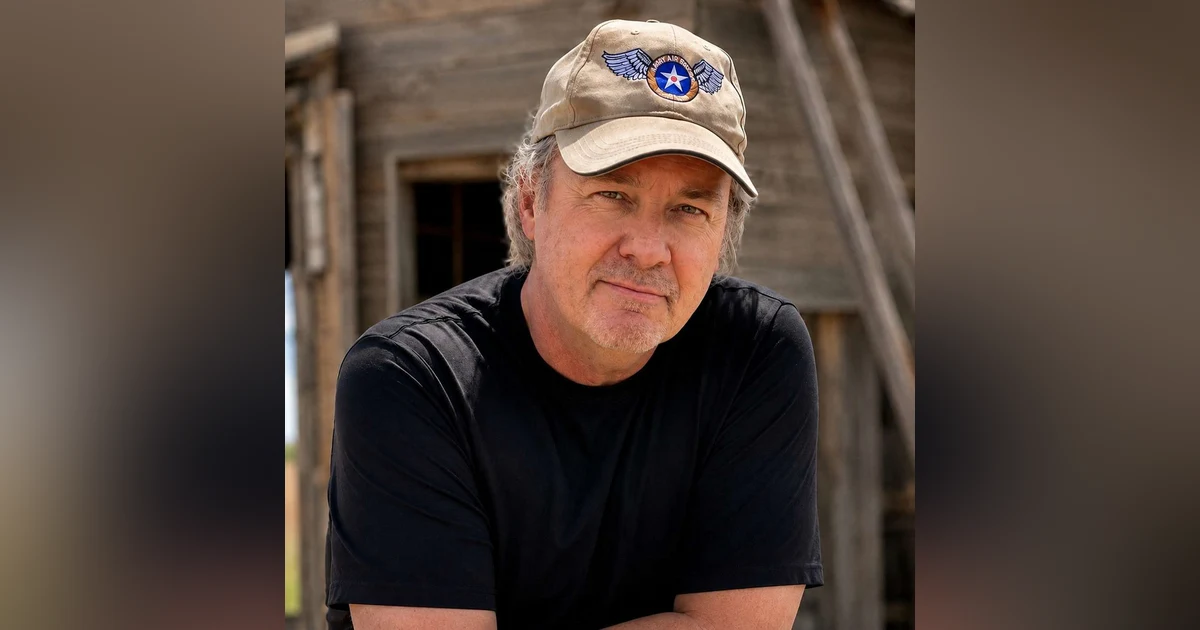

Send us Fan Mail Send us Fan Mail In this lively episode of Living the Dream with Curveball, we welcome Texas country singer-songwriter Randy C. Moore. Randy reflects on a musical journey that began in his teens, from performing at Houston’s Gilley’s nightclub to studying music business at Belmont University and taking the stage at the Grand Ole Opry. Along the way, he learned from legendary artists and built a career rooted in songwriting, live performance, and staying true to himself. Randy...


 RSS Feed
Key Takeaways
- Texas country singer-songwriter Randy C. Moore reflects on a lifelong musical journey that began at age 16 performing at Houston's legendary Gilley's nightclub.
- Learning from rockabilly icon Carl Perkins taught Randy the importance of maintaining the original live energy and emotional spark when writing and recording songs.
- Randy's upbeat single "More Than One of the Boys" was inspired by his tomboyish upbringing and the woman who would eventually become his wife.
- Recording at Nashville's historic RCA Studio B infused his music with the driving beat and historic spirit of legends like Elvis Presley.
- Randy's primary advice for aspiring artists is to stay true to your artistic identity, learn every aspect of the entertainment industry, and adopt a policy of saying yes to new opportunities.
Send us Fan Mail
In this lively episode of Living the Dream with Curveball, we welcome Texas country singer-songwriter Randy C. Moore. Randy reflects on a musical journey that began in his teens, from performing at Houston’s Gilley’s nightclub to studying music business at Belmont University and taking the stage at the Grand Ole Opry. Along the way, he learned from legendary artists and built a career rooted in songwriting, live performance, and staying true to himself.
Randy shares stories of writing with rockabilly legend Carl Perkins and helping produce a Dan Fogelberg tribute recording featuring Alabama’s Randy Owen. He also talks about his new single, “More Than One of the Boys,” inspired by the spirited, outdoors-loving woman who would eventually become his wife. Recorded at Nashville’s historic RCA Studio B, the upbeat track carries the energy of a place where Elvis Presley made music.
Listeners will hear about:
- Randy’s early start performing and finding his path in country music
- Lessons in songwriting and keeping the original spark alive from Carl Perkins
- The stories behind “High Cost of Low Living” and “More Than One of the Boys”
- Recording at RCA Studio B and collaborating with longtime friends and musicians
- Learning to define success on his own terms and preserve his artistic identity
- Randy’s advice to aspiring artists: stay true to yourself, keep learning, and say yes to new opportunities
Randy’s story is a celebration of creative independence, friendship, and the joy of making music for an audience. Hear “More Than One of the Boys” and learn more about Randy’s music and live shows at www.randycmoore.com
Frequently Asked Questions
Who is Randy C. Moore?
Randy C. Moore is a Texas country music singer-songwriter known for his storytelling, live performances, and songs like "More Than One of the Boys" and "High Cost of Low Living."
What inspired Randy C. Moore's single "More Than One of the Boys"?
The song was inspired by spirited, outdoors-loving women like his mother and his wife, Linda, who enjoy activities typically associated with the guys.
Where was Randy C. Moore's single recorded?
His single "More Than One of the Boys" was recorded at Nashville's historic RCA Studio B, famous for the recordings made there by Elvis Presley.
What advice does Randy C. Moore give to aspiring artists?
He advises artists to stay true to themselves, learn the various technical and operational roles within the music industry, and always say yes to new opportunities.
Welcome to the Living the Dream Podcast with Curveball. If you believe, you can achieve. Welcome to the Living the Dream with Curveball Podcast. a show where I interview guests that teach, motivate, and inspire. Today, we're joined by Texas Country Music Singer, songwriter, Randy Seymour. Randy has an impressive impressive stages. And he's working with legendary artists. He has a new single I called More than One of the Boys. I really like that song. It's really nice. You should definitely check it out. It was just released, so we're going to be talking to Randy about his career and everything that he's up to and gonna be up to, and what inspired him to write that new single. So, Randy, welcome to the show.
SPEAKER_00It's good to be here, Curtis. How you been?
SPEAKER_01I've been pretty good. Why don't you start off by telling everybody a little bit about yourself?
SPEAKER_00Well, I'm I'm glad to be here with you tonight. Um where are you where are you where are you uh where are you tuning in from? Where where am I talking? I'm in East Texas. Where are you at, my friend?
SPEAKER_01I'm in Wichita, Kansas.
SPEAKER_00Oh man. Okay. Are you you're not the Wichita alignment, are you?
SPEAKER_01I wish I was, but I am not.
SPEAKER_00It's a good song.
SPEAKER_01All right. Well kind of let the listeners know your story and anything you want them to know about you.
SPEAKER_00Well, um just for your listeners, just for the folks who are out there, um I um was born in Memphis, Tennessee. Um I grew up in a little place called Umble, Texas, because um uh that's where I grew up mostly. Um I got into music. Uh I didn't really want to be a musician. I want to be an artist because I like to paint and draw and things. Thought I'd be going to art school and um found out that girls like guitar players better than they like people that draw pictures, so I decided to be a musician and um started writing songs uh somewhere around high school, early in high school, and um uh a friend of my dad's who was a disc jockey there in Houston. Houston is is right around my hometown where I'm from. Um anyway, he was a pretty big guy there in Houston, and um my dad called him up and said, Hey, you know, my boy Randy, he's uh writing songs and everything. They're like country songs, and uh it would be great um if you could just listen to him and say, Yeah, bring him on down. So I went down and we played some songs for him, and he liked what I was doing, so he helped me get some recording sessions there in Houston, helped me get started. Um he had a show that he was doing at Gilly's Nightclub every Thursday night, and he invited me to play on that with him. So that gave me a whole lot of experience. I was only 16 years old, gave me a whole lot of experience playing uh in front of an audience and playing in a nightclub and that whole thing. Of course, my my parents would go with me because I couldn't get in there by myself, but uh that was okay. They were always real supportive of what I was doing. So then after that, um once I was starting to I actually made a record and put a record on the uh didn't really put it on the charts, but it got played on the radio a lot when I was a kid, and I was like, oh, this is pretty neat. So I decided to move to Nashville and I moved there. I worked at a place called Operland Show Park, and I went to Belmont University. Uh, it's a school where they had a music business program. Um, I learned a lot about recording and writing songs and things like that while I was at Belmont and being in Nashville. Being at the Operland theme park, I got to be on the Grand Old Opry and I got to open shows for a lot of different uh actual established artists, which was really a good experience. I got to learn a lot from those folks. So um that was uh was pretty much my beginnings, you know. I'm I uh I've I've enjoyed I've I've been enjoying everything I've been doing, and and in the last 10 years, I've really enjoyed uh what I've been doing immensely. I'm I'm I'm really having a great time, loving making my own records, writing my songs and and going out and playing for people. It's it's it's been a real it's been a real gas, as they say, man. So there you go. That's kind of me, that's kind of me in a nutshell to start off with.
SPEAKER_01Well, when did you realize music was something that you wanted to do professionally?
SPEAKER_00Well, I kind of it kind of decided for me because um I went from uh writing songs and and doing these records and things and playing at Gilly's to uh working in live shows or worked some live shows in in Houston uh at a theme park there called Astro World. And I was actually making a pretty good living doing it, and I still hadn't graduated high school yet. So um, you know, my my original plan was to, you know, go to college, um, go four years and get a degree or something like that, but it didn't work out that way. I started working so much that um like I said, the the choosing to to play professional sort of decided itself for me, and I just kind of just followed my nose. Uh, and it's it's it's been okay so far. So um, and I was probably I'd say if if we had to pin down a a date or an age, probably when I was about 17 or 18 years old, is when I thought, well, I think I need to start taking this seriously because I really like doing it.
SPEAKER_01Well, I know you've got to work with legends like uh Rockabella legend, Carl Perkins and uh the guy from Alabama. Can't remember his name right now, but but Randy Owen. Randy Owen. Randy Owen, that's right. But talk about what those experiences taught you about music, creativity, and the business.
SPEAKER_00Well, um Carl Perkins was always a hero of mine when I was a kid growing up because I liked um Johnny Cash and Elvis Presley and all those guys from Memphis. My my dad had a lot of that music around the house. So uh when I got the opportunity to write songs with Carl, I just jumped at it, you know. And um I didn't know what to expect because he was he's a pretty big star, I mean, big international star. I mean, heck, the Beatles recorded his songs, and people like Eric Clapton always told everybody how Carl Perkins, you know, influenced his guitar playing and stuff. So I didn't know whether to be scared, intimidated, or just in awe. And um, when I finally showed up at his house uh to write songs with him, he came walking toward me. He was uh coming out of his studio and he came walking toward me, and he reminded me of my dad. And all of a sudden I was kind of put put at ease there, and he did everything he could to put me at ease to make me feel comfortable. We actually wrote a song that day called Blood Brothers, which is a beautiful little song. And um he and I had lunch later on, and uh we wrote several songs together, and what I learned from Carl was uh mainly uh when it comes to making up songs and making records or or recording songs, the the the best thing, the best thing you can do to help yourself is try to always keep that that original energy in it, the thing that really got you going, the real the thing that really made you feel like that was really something. Try to keep that in the song. Don't don't don't work it so hard and don't don't try to record it so many times that you just kind of like lose that feeling. So he was really good at that at making things have that feeling to it. And and it's that's pretty important because when you make records, whether you make them live with a band or whether you do them nonlinear, where you you record some of it, and then you got another guy comes in and records, and you got another guy, another gal coming and record, you know, just kind of build a track, so to speak. Um, it's important that you still know how to have that live excitement, that that that electric that electric type feel to it that makes it kind of jump out there and and and grabs people a little bit. And Carl was so good at at doing making songs where you know he could he could grab you, he he would have a something, he would say in a lyric, he would he would grab you, you know, or the way he would play a little guitar lick, you know, he would just get you, he'd get you, he'd get your ears going, and then once he got into your ears, then it would get into your brain. And once it got into your brain, it'd get into your heart, and it get into your heart, it gets into your soul. So he would connect all those dots real good. So I I learned a lot about how those types of things work from him. Um I worked with Randy Owen. Um, I was actually a producer on a record. Uh, it was a Dan Fogelberg uh tribute album, and uh there were a lot of different artists that we were working with. Uh my friend Norbert Putnam was was producing, and I was helping co-produce, and we had people like Donna Summer come in and do a song. Uh we had um you know Zach Brown, they did a song. Um the guys uh from uh train did a song, and I worked with Randy Owen, and Randy um basically kind of it was really weird because here is a guy that I had admired for years and years, great singer, great artist, and really a great guy. And he's asking me questions, he's relying on me, and I'm not going, okay, well, this is a switch. So I guess I gave him the right answers because the record sounds really great. He did a song called Sutter's Mill, which was an old Dan Fogelberg song uh about uh how they discovered uh gold at Sutter's Mill. And I got to sing back up on that and play a little bit on it. But basically, I was the guy who helped produce the record, so it was it was kind of a neat experience for me to be able to do that. And I have to I have to thank my buddy Norbert Putnam for getting me to do that because um I think he wanted me to get that kind of experience with somebody who was a really big star uh to not be nervous and work with them and and just kind of know that you know all these guys, they're just they're just like you and me, man. They just they put the pants on one leg at a time, and they got they got feelings, they got hurts, and they got they got joy, they got everything, you know. They're they're not they're not so different from from all of us. It's just that we see them differently uh until we actually get to spend time with them.
SPEAKER_01Well, let's talk about your 2026 uh breakout release, high cost at low living. Kind of talk to the listeners about what expired inspired that song and tell us anything that you want us to know about it.
SPEAKER_00Well, it's a it's a funny little thing. Um, my uh my friend that I write songs with, his name is Mason Cooper, and he and I met up years and years ago. He was working for Eddie Rabbit's publishing company, and he was pitching songs, and they wouldn't ever let him pitch his own songs, but he still wanted to write songs. So I would show up down there and we'd write songs together. So it wasn't maybe 10 years or so after that we we got together again and started writing songs, and he had this idea for the high cost of low living, and um I knew that he didn't know a whole lot about it, but I'd been traveling on the road and I'd been playing in honky tonk bars and just going crazy, all kinds of crazy stuff with my life. And I said, Mason, I said, why don't you let me take this song because I think I know what it's all about, and so once we finished it, uh we made a really good record of it. Um, we actually got to record that at a place in Nashville called RCA Studio B, which is a very famous recording studio. Uh they actually built the recording studio for Elvis back in the late 50s, and um it was really a good experience, and uh we got several several songs out of those recording sessions. As a matter of fact, my new record that I have right now, the uh the song's called More Than One of the Boys. We recorded that around the same time and in the same studio, so it's got a lot of really good energy on it.
SPEAKER_01Well, let's talk about your single It's Out Now, uh More Than One of the Boys. Yes, sir. Really like that song, it's really an upbeat song. It's uh basically talking about a woman that's uh more than one of the boys that you really love, but you guys are still doing some of the things that you do with the fellows. So kind of tell us about that song.
SPEAKER_00Well, actually, you just you just described it right there. That's that that was really the idea when Mason brought that into me. Uh I said, I I think I think I kind of know a little bit about this. You know, my mom was a little bit of a tomboy, and she would go fishing with us, me and dad and and my brother, as she'd go hunting with us, we would go bird hunting. She loved to do that. Uh, she liked to go to baseball games, and heck, she'd just get out there and throw the baseball. She wasn't very good at it, but she liked doing it anyway. But um, I wrote the song and and I played it, I don't know, probably maybe a year after I'd written it. I was I was playing it in a little place in Nashville called the Bluebird Cafe. And when you play at the Bluebird Cafe, you're with a lot of other songwriters. And so when I got done, somebody came up to me and said, Hey man, that that song about the the boys, the more than the boys. I said, Yeah, more than one of the boys. They said, What's that song about? I said, Well, I really don't know. I don't know who that's about. So uh fast forward to nine years ago, uh, I married the woman that the song embodies. Uh she's truly one more than one of the boys. Linda, my wife, uh, is just pretty much what that song talks about, which I'm pretty delighted with that. Um I tell people all the time now when they ask about the song and and how I got married finally to the to the girl in that song. I said, Well, I said, I look at it like this. I said, I think Santa Claus finally got my letter. So there you go.
SPEAKER_01Well, you've also recorded your latest music at RCA Studio B where the legendary Elvis Presley recorded. So talk about uh what it was like recording at such an iconic studio knowing the history.
SPEAKER_00Well, if if um if anybody's ever been to Nashville and gone to the Country Music Hall of Fame, they've either seen or they've gotten to go through a tour of RCA Studio B. RCA Studio B was built back around 1958-59 uh because Elvis uh lived in Memphis and he didn't particularly want to keep going to New York or record in Los Angeles, and he wasn't recording in Memphis anymore. And RCA didn't have an office in Memphis, they had an office in Nashville. So they built a studio that would suit him his sound, and it's really a great studio because it's it's a smaller recording studio. I mean, you can get uh quite a few musicians in it, but it's a smaller recording studio comparatively, and it has such a such an awesome sound to it. It's it's just one of those things where the the guys who were building it, they really knew what they were doing. Of course, Chet Atkins was in charge of building it. And um it was it was uh it's got a I don't know, there's just kind of a also I'm not gonna say ghosts, but there's there's definitely a spirit in the in that in that room when you're standing in there recording. You can feel something that's kind of exciting uh when you're doing your song and and making a record and stuff. The uh guy who played drums on my record session is a guy named Craig Cramp. He is he played on some pretty famous records back in the day. He played on a on a uh record called Betty Davis Eyes. He wrote and he co-produced and played on a record called O'Sherry for Steve Perry, the guy who was the lead singer from Journey. So it has a really good excitement on it too. It's real driving beat. So I think people seems like that that they're really enjoying uh more than one of the boys. And I think the reason why is because it's got that excitement from that studio, and it's got Craig Kramps playing on it, uh his his drumming and everything. So it's just uh it's a real fun record, and I I encourage anybody who hasn't heard it to to dial it up. You know, you can find it on iTunes and you can find it on Amazon Music and stuff like that. Just look for me, Randy Initial C more Than One of the Boys, and I thought I think you'll enjoy it. You you you already told me how much you like it, and I really appreciate that, Curtis.
SPEAKER_01Absolutely. So um speaking of uh Craig, you've also worked with Mason Cooper and uh Barry Sanders, you know, Nashville's best. So uh talk about what all of them, you know, working with them added to your recording process.
SPEAKER_00Well, like I said earlier, uh I Mason and I met up when he was just out of college and I was still going to college a little bit. And um we were just kids pretty much. I mean, I think I might have been 18 or 19, and I know he was probably 17 or 18 or 19, and he had gotten hired to work for Eddie Rabbit's publishing company. Eddie Rabbit had, you know, a big song called Uh I Love a Rainy Night and things like that. And um, so Mason uh he was a he's a musician and he's a composer, but he was hired to pitch other people's songs, not his songs. So when I met up with him, uh I didn't have anybody I was really writing songs with, and neither did he, so we just became fast friends. We started writing songs together, and we seemed to have a, I don't know, sort of a camaraderie, kind of a like-mindedness kind of a thing. We really got along well, kind of like uh just kind of like two old buddies would get along. Um Mason kind of taught me a lot about the business as far as like uh also producing records, making how to make records sound the way you want them to sound, and and always trying, and one of the things he kind of instilled in me is no matter what you're doing, be true to yourself uh when you're writing a song and when you're singing a song. Make sure don't take yourself out of it, you know. Don't try to be on the outside of it, be true to yourself, be be honest and be on on the inside of that song or inside of that feeling, and it'll always work for you. And he he's right, because uh anytime I've I've never followed that rule, uh, it's never worked out. So um I always try to stay with what what old Mason kind of told me way back then. Um my buddy Barry Sanders um uh is a recording engineer and a and a record producer in his own right. A lot of people think he played for the Detroit Lions. That's a different uh Barry Sanders, football player. And uh Barry is one of the most amazing guys when it comes to uh when they say a producer has great ears, that means they really know how to make a record sound great. And it's not all the technical stuff that they know, it's just that what whatever they hear, they know what to adjust to make it just sound just so sweet and so good. And Barry's that kind of guy. I really respect his talent, and I've learned a lot about making records from Barry as well, and also once again, another very good friend. And um, I've just been really blessed to be able to have folks around me that um always had my best interest at heart and actually genuinely like me, and I genuinely genuinely like them. So it it uh it's really good. These records that I made with Mason and with Barry, um uh actually I really love them, not just because I love the way the records sound, but because I love who I made them with. So it's uh it's pretty cool. If anybody's a musician or an artist or something, and uh if you can have that kind of experience, you'll always want to keep coming back to it. So that's what I I say. Just uh do something that you love uh because uh it'll love you right back.
SPEAKER_01Well, I know you know people see the performance is the success of music, but talk about your biggest musical challenge that you faced during your career and how you managed to overcome it.
SPEAKER_00Well, let me see. Um probably the biggest challenge I ever faced was um basically trying to be ambitious because I'm not a very ambitious person. So most of the things I've ever done uh I never planned, and most of the things I've ever planned, I've never done. And I had to kind of learn ex learn to accept that that's really the way that it is for me. It's not that way for everybody, but it is that way for me that you know I have to just kind of let things happen naturally simply because they turn out better. And so I had to learn to not force things. That you know, a lot of times when you write songs in Nashville, you're very you're very persistent on trying to get songs that you can get other artists who have record deals and who are famous to record. That can be very frustrating. As a matter of fact, it can be frustrating to the point of where you want to quit. I had to try to keep in mind that yeah, I wanted to get somebody to record my songs, but more than that, I wanted to do something that was going to make a difference. Whether somebody uh recorded them or whether I recorded them or whatever. I wanted to be able to make a positive uh difference with what I was doing. So as a challenge, uh it's always kind of been a challenge for a while to sort of keep looking at that mountain and keep going, well, I'd like to climb it, but I don't have the first clue as to how to get started on it. Um it's it's a strange thing that that we go through as songwriters uh when you need to be on the inside of yourself to be creative and you need to be open to things on the outside to be creative. But the last thing you need is a lot of voices telling you what to do, and saying this, and saying that, and doing this and doing that, because at the end of the day, uh you really have to be the person to live with it. So I would say that my greatest challenge was learning how to go from learning things and hearing things and and and and disappointments and all this kind of stuff, going from that to being satisfied with what I was doing personally and being satisfied with what I was doing professionally. Once I got to that point and I realized this is what makes me happy, then everything smoothed out a whole lot. And it's not easy to get to that that place, it really isn't. So uh, and I think I think probably every every songwriter or every artist that you may ever run into or talk to, Curtis, in at some point in time, they have had this that this is this has been their holy grail or their their their mountain that they've had to try to climb or or or something that they've had to overcome. You know, that they they're trying to get from what what is it that I need to be doing to get to this is what I need to be doing. I mean, it's it there's a separation there, and once you break through and you get to that other side, things are so good. So um that was that's probably the biggest challenge that I've ever had. Uh, and it was an ongoing thing, it wasn't just one event or something like that. So um I and I'm thankful, thanks for asking that because I I'm glad I I'm able to share that with other people.
SPEAKER_01Well, when people look back on your musical journey or your musical career years from now, what do you hope they take away from your music, your character, and the impact that you made?
SPEAKER_00Um I don't really know. I mean, I I think that I hope that uh that whatever people draw from whatever I'm doing is gonna be either a good influence on them or it's gonna l give them a good feeling. Uh it certainly um uh everybody always wants to be remembered. That's always a big deal. Um I I think uh my biggest thing I first of all, what I really like to do is I like playing live music because um for just a little bit of time I can make somebody feel better, I can take them away from their troubles, or I can remind them of something good, or make them feel something good, or maybe even make them feel something that that it might make them feel sad, but it's a it's a it's a feeling that they needed to feel. So in that sense, uh that's kind of what my job has been. So I hope that whatever it is that I do when I'm gone, I've kind of left things a little bit better than when I found them.
SPEAKER_01Well, if you could give one piece of advice to an aspiring country music artist who has a dream but hasn't yet found that breakthrough, what would that advice be?
SPEAKER_00Well, I always say this to anyone who ac actually asks that question or wants to know. Uh there's there's a couple of things that have always kind of helped me. Um one is um when you are in this and people start to recognize that there's something there, just remember they easily can take things away from you that are yours if you let them. Don't don't let anybody really take anything away from you. I let me explain that statement a little bit. I tell people, look, if you're an artist, if you're a songwriter, if if you're a singer, this is your this is your thing. This is you. The people who are around you, an AR guy can always get another singer, another artist, a publisher can always get another writer, a manager can always get another uh, you know, artist, another singer, um, a promotions person can always promote another show. You know, somebody who books a uh a nightclub can always book another act. They can all do all this for anybody else. Don't let them pass you by and don't let them take from you. Make sure that you you're true to yourself because at the end of the day, all those people will fade away and you're gonna be left standing with whatever it is that you were able to apply to it. So apply everything that you can and keep as much of yourself in your music and keep as much of yourself in your artistry as you can. Yes, you're gonna have to adapt. Yes, you're gonna do things differently, and you're gonna be influenced. There's nothing wrong with any of that. Don't let the voices and all these other things influence you away from who you are and what makes you unique and what makes you that that person. The other thing I tell people is they always ask me, they say, How is it that you were able to do so much over your span of your career and everything? And uh, you know, how is it that you still stay so busy? I've always had a policy for a long, long time, and that policy was whenever I'd get a phone call, before I would pick the phone up, the answer would be yes. And then when I would hang the phone up, then I would say, okay, now I need to figure out how I can actually do that. And I've I've been able to learn a lot of things about um the entertainment industry through that. I mean, I've said yes to a lot of things. I had no clue how to do it. But when I got there, I either learned or I tried to figure it out before I got there. So consequently, uh I actually know some you know things about making music videos. I know something about making records, recording records, engineering, writing songs, stage lighting, uh running monitors, running mains, uh, you know, all these different aspects that actually make up, you know, a whole division of people who work to put an artist on the map. I've learned all these different jobs that they do. And I mean, I've been a disc jockey, I've been a show host, I've done all these different things. And it wasn't that I was confused about what I wanted to do, I was genuinely interested in learning what that person over there who was holding the camera, or that person who was in front of the recording console, or that person who was behind the monitor board, or that person on the lighting panel. I was genuinely interested in how things worked and how they did their job. And the more of that that I know, the more that I can tell somebody when I'm in a situation, okay, I'm I'm gonna need this, I'm gonna need this, and I'm gonna need this. And they know and I know how to talk the language to them, and it makes them easy, it makes it easier for them to do their job to the best of their ability. So, in a way, uh, if you're going to be an artist, if you're gonna be a singer and you're gonna be a band leader, then what you have to learn how to do is you have to learn how to be the captain of the ship. And the captain of the ship is usually a guy who came up all the way through the ranks. He knows everybody else's job, he knows what everybody else on that ship knows has to do, and he can, in a moment's notice, he cannot be the captain and go do what the uh that other guy is doing because he the other guy either can't do it or won't be able to do it well. So when the phone rings, it the answer is yes before I even pick it up.
SPEAKER_01Well, tell us about any upcoming other upcoming projects that you're working on that listeners need to be aware of.
SPEAKER_00Well, right now, um, I've kind of got myself in a zone, Curtis, where um my website works real well to get people to hear my songs and see where I go play my concerts at. Um my Facebook pages also work very well with that. My website is Randy Initial C More M-O-O-R-E.com. My Facebook pages are Randy C More Music and Friends of Randy C More. And that that page is a lot, has a lot to do with my live playing and stuff like that. So uh what's coming up for me is what I've been doing probably for the last couple years now, um, playing listening rooms, playing places, playing for people who come to see my shows because I've been able to establish a pretty good following in the last uh seven, eight years. Uh especially being here in Texas, I have a really good following, and I'm really proud of that. And I really genuinely love these people who come out to see me because I like for them to be part of what I'm doing. And I I hope that they feel like that that they like for me to be a part of what they're doing.
SPEAKER_01Well, you just gave out your contact information, randycmoor.com. So close us out with some final thoughts. Maybe if that was something I forgot to talk about that you would like to touch on. Any final thoughts you have for the listeners?
SPEAKER_00Well, I don't know when this is uh how many times this is going to go around, the airwaves, but um, and I I don't know how anybody feels about any of this, but I will say uh folks, anybody out there listening, uh please put your faith in God and put your faith in yourself and put your faith in your friends and your neighbors. Uh anybody else that you don't know, that you see them on TV or you see them on social media, don't worry about them. They're just trying to get your attention. The people who matter are the people who are closest to you, and and God is closest to you. So make sure you stick with all of that first, and everything else will make a lot more sense.
SPEAKER_01All right, ladies and gentlemen. So, for more information on Randy and his music, visit randycmore.com. Check out that new single, More Than One of the Boys. It's a great song, and I'm sure you'll love it. Please be sure to follow Rate Review, share this episode to as many people as possible, especially all of the country music fans out there. And also to keep up with all things, live in the dream, to know when we release a new episode. If you haven't done so, visit www.curfball337.com, sign up for that newsletter. If you know somebody who hasn't signed up for the newsletter, check out the site, share the show and the website to everybody. Thank you for listening and supporting the show. And Randy, thank you for a great song and great music, and thank you for all that you do, and thank you for joining me.
SPEAKER_00We'll get together again, okay?
SPEAKER_01All right.
unknownAll right.
SPEAKER_01For more information on the Living the Dream with Curveball Podcast, visit www.curveball337.com. Until next time, keep living the dream.