From Laughter to Legends: Richard Sparks' Journey from Comedy to Epic Fantasy
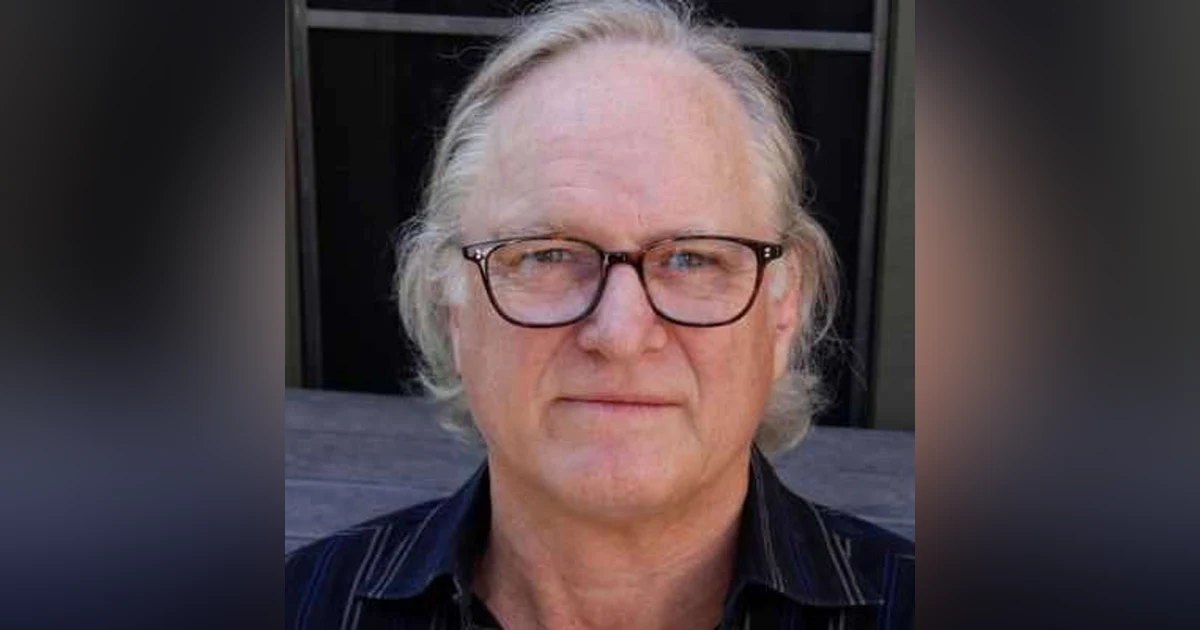

Send us Fan Mail Send us Fan Mail In this captivating episode of Living the Dream with Curveball, we welcome Richard Sparks, an English-born writer now residing in Los Angeles. Richard takes us on a journey through his diverse career, from his early days as a comedy writer for iconic British television shows to his latest venture into the realm of rock fantasy literature with his new series, *New Rock, New Rules*. Richard shares his unique perspective on discovering gaming culture later in li...


 RSS Feed
Key Takeaways
- Richard Sparks transitioned from writing for iconic British comedy shows like 'Not the Nine O'Clock News' to creating an epic rock fantasy book series.
- Discovering gaming culture later in life provided the creative inspiration for Richard's 'New Rock, New Rules' fantasy series.
- Mastering story structure and tightening narrative drafts are crucial skills that apply equally to comedy writing and fantasy storytelling.
- Taking the leap to leave a stable office job and pursue a full-time writing career required resilience and a willingness to embrace failure as a teacher.
- Aspiring writers must give themselves the time, space, and single-minded dedication necessary to hone their craft rather than treating writing as a casual hobby.
Send us Fan Mail
In this captivating episode of Living the Dream with Curveball, we welcome Richard Sparks, an English-born writer now residing in Los Angeles. Richard takes us on a journey through his diverse career, from his early days as a comedy writer for iconic British television shows to his latest venture into the realm of rock fantasy literature with his new series, *New Rock, New Rules*.
Richard shares his unique perspective on discovering gaming culture later in life, revealing how it inspired his writing and shaped his storytelling. He discusses the creative process behind his series, which blends elements of gaming with epic adventures, and how his background in comedy informs his approach to narrative structure and character development.
Listeners will learn about:
- The transition from comedy writing to fantasy storytelling and the similarities between the two
- Insights into the gaming world and its influence on modern literature
- The importance of story structure and the art of editing
- Richard's personal experiences and anecdotes from his career, including his work with comedy legends
- Advice for aspiring writers looking to reinvent themselves and pursue their passions
Join us for an engaging conversation that not only highlights Richard's remarkable journey but also inspires listeners to embrace their creativity and follow their dreams, no matter how unconventional they may seem.
For more information on Richard Sparks and his work, visit www.richardsparks.com where you can find free chapters of his books and stay updated on his latest projects.
Frequently Asked Questions
Who is Richard Sparks?
Richard Sparks is an English-born writer based in Los Angeles known for his early career as a British television comedy writer and his later work as an author of epic rock fantasy literature.
What inspired Richard Sparks to write his fantasy series?
Richard was inspired to write his 'New Rock, New Rules' fantasy series after discovering online gaming culture and sword-and-sorcery multiplayer games later in life.
What British comedy shows did Richard Sparks write for?
Richard wrote for famous British television comedy shows, most notably the hit sketch comedy show 'Not the Nine O'Clock News' in the late 1970s and 1980s.
Where can readers find Richard Sparks' books and free chapters?
Readers can visit Richard's official website at RichardSparks.com to find free written and audio chapters, blog posts, and updates on his latest projects.
Welcome to the Living the Dream Podcast with Curveball. If you believe, you can achieve. Welcome to the Living the Dream with Curveball podcast. A show where I interview guests that teach, motivate, and inspire. Today's guest is an English-born writer, now based in Los Angeles. His name is Richard Sparks, and he is the author of a new Rock Fantasy series, including his new release, New Rock, New Rules. And this series was developed off gaming culture, which Richard discovered later in life. And in his earlier career, he was a famous British comedy writer and wrote for some famous British comedy shows. And so we'll let him talk to us about that and everything that he's up to and gonna be up to. So Richard, thank you for joining me.
SPEAKER_01Thank you for having me.
SPEAKER_00Why don't you start off by telling everybody a little bit about yourself?
SPEAKER_01Well, I'm now old, but I've been a writer all my life, so I still feel that I'm, you know, the fact that I haven't spent 40 years in an office means I suppose that you've never really gone through the process of, you know, going up the corporate ladder and you know maturing that way. So I've always been a writer, I'm still a writer, and uh I'm still learning. I started off writing comedy sketches when I was at university, and various people of my time there who uh went on to have distinguished careers as comedy stars, um, some of which are still continuing. And that led from one thing to another. I started working for Welsh television in a very, very lonely job. That was my first job. Lowly, not lonely. Uh that was my first job out of university, and uh I was living in Cardiff in Wales for two years, working in a little hut by a golf range in the rain. It always seemed to be raining. Um anyway, that was a good experience. I learned a lot. It wasn't very high level, so I didn't wasn't doing anything exciting like directing, but I got um I got a gig while I was there from a producer who gave me some half-hour scripts to write that was outside my job. So that was something to take with me when I went back up to London, got an agent, and she started putting me in touch with producers who were foolish or kind enough to hire me, and then um they kept doing that. So, and also I did a lot of script editing, working with other writers, working with producers, helping everyone put scripts together, because it is a it's a communal business. You're not just one person writing the script and one person reading it like in a book, even though, of course, you've got publishers and editors to help the process. But in television or film, it's a it's a group effort, and the writer is just one of the team or the script editor, just as the actors are part of the team and the directors part of the team. And the team works together with often with creative differences. I want to stress that we're not always just blindly doing the same thing that everyone else is, we're all bringing our um expertise and expertise and insight into the process so that um you know the creative differences make the work better. Uh you know, it's it can be it can be quite quite stressful the process, uh, especially if you've got time constraints and things need to be done by yesterday. But it's it's a very fertile and creative ground, so it's been lovely to spend a lifetime doing it.
SPEAKER_00Yeah, well, tell us about your uh comedy show that you wrote for the famous uh British comedy show.
SPEAKER_01Uh that was the show called Not the Nine O'Clock News, which was in the 197 was it? When did it start? Yeah, 1979, I think that started. I'd written a sketch for Rowan Atkinson before he was uh anyone knew who he was. It was done in a small theatre in London. Uh and John Cleese saw it and asked Rowan to be in his next charity film called The Secret Policeman's Ball. What I learnt recently was that everyone wanted to cut Rowan out of the film because he was a complete nobody, and they had four and a half hours of the great and the good of British comedy and rock and roll stars. And in order to make a hundred-minute film, they had to cut a lot of people out. But the director, Roger Gray, fought tooth and nail to keep Rowan in the film, and um that was great. He did my sketch and he went on stage in unknown, came off a star, and um people got to see him and realised how brilliant he is, and he he always was brilliant since the first time I ever saw him on stage. Weirdly enough, he'd seen me on stage before I ever saw him because I was doing a post-student comedy show at the Edinburgh Fringe Festival with my partner. I was I mainly wrote the stuff and he was the funny one, but you know, together we did something that was quite interesting. And Rowan and the people from um the Oxford Review that year came to support us and and see us, and Rowan afterwards said, I don't know why we're bothering to do shows when there are people like you doing things like this. So I thought, well, nice, polite, how kind of him to say so. So my partner and I went to see his show a couple of days later, and he just blew the roof off. I mean, we couldn't believe it. The two of us turned to each other and what is that up there? It was, you know, perfectly normal student reviews, some good, some bad. And uh Rowan was just I mean he's extraordinary, the real thing. So um it it was to me it was quite clear that he would go on and become uh something, and uh it was really nice to have some involvement with him, you know, way, way back before anyone else did. And then what did I do after that? Um yes, then I well I was then not the nine o'clock news came along, that was put together by a director call a producer called John Lloyd, who's our generation of students. He was at Cambridge University, and I and Rowan and Mel Smith, who I recommended to John, was in the sh cast in the show. Uh uh Rowan was one of the others, as was Griffries Jones, and uh Pamela Stevenson, the Australian comedia and actress who was brilliant. Uh, and that show really took off because in those days there were only four television stations in England. BBC Two was new, and so while the grown-ups were watching the news at nine o'clock, the kids would be watching not the nine o'clock news on BBC Two, which was taking the Mickey out of everything, a lot of topical comedy, uh uh, which is not a strength of mine. I was, you know, one of the less prolific writers on that. I I did some stuff for it, but I'm much better at off-the-wall, you know, surreal stuff, I think, rather than uh political satire, where there are you know great writers like you know Armando Ionucci of another generation is is a brilliant political satirist. So that show was a big hit, and uh I kept working in that business until 92 when I came over to the USA to Los Angeles. I was headhunted by Blake Hunter and Marty Cohan, who created Who's the Boss? And so I was working for the uh uh at Columbia Pictures Television uh under them. And um stayed here ever since. My wife's family lived out here, which was great. They gave us somewhere to camp out while we looked around and saw if I could make a go of working over here. And one thing led to another, and we're still here.
SPEAKER_00Congratulations. Let's talk about your uh new rock series. It was inspired by gaming. So uh tell us about the series and and uh what it was like discovering gaming later in life. Life.
SPEAKER_01Well, it I mean, I discovered gaming kind of when everyone else did. I just happened to be older than the kids who got into it at 16. You know, I I when I started, I thought everyone was a 16-year-old until one day I was in a a game and my guild master at this guild it was a sword and sortery fantasy game with many, many people playing together online, player versus player. And she typed in group chat, does anyone want to take over running the guild? Which is hard work, not me. She said, I'm retiring next week, I'm 85. And I thought, oh every there are people of all ages playing. And this was 10 or 15 years ago. So I fell in love with the whole world of fantasy and sword and sorcery that you could uh uh uh indulge yourself in online because you know, in a film you're watching somebody else representing you, you're the hero or the heroine. Uh in a game, you're actually the hero of your own story. You can create your own avatar, you can go anywhere, you can do anything. And so I completely uh you know, I was turned on to the games by Douglas Adams of Hitchhiker's Guide to the Galaxy Fame, who was a contemporary of mine. I'd known since we were, well, students and leaving leaving uh university and starting out as writers. We'd worked together on some stuff, and he was brilliant. And he said to me, you know, you've got to get into these games. I remember saying to him, but shouldn't you be writing? What are you doing playing children's games? Anyway, he gradually showed me that I was completely wrong about that, and uh and there are wonderful, wonderful ways to uh to to explore ideas and also to to play with other people all over the world. I've always loved playing games, everything from poker, I was a keen poker player for a while, uh, and games and gaming was a natural fit. So one day I was playing a game in uh you know a a player versus player game with 24 other people in my gang getting up to mischief, and I just suddenly thought, what would it be like to be this guy, this heroic young battle mage with a magic staff, getting up to adventures in real life, not not in a game, everyone's written that before. So there's only one way to find out, and that was to write it. So the idea just fell out of the sky and hit me. And so our hero, uh he and his two mates win the world championship of g sword sword and sorcery online, and the next thing he knows he's whisked off down a lot of special effects and ends up on a hillside clutching a crappy sword and shield, and he's being chased by wolves. I mean, what would you do? You know, you may be good at winning world championship games by pushing a mouse around, but in real life, uh no, he'd be useless. So he's it's pretty much from hero to zero in the first chapter, and then he's got to find his two teammates, neither of whom he knows anything about in real life. One is an Australian player whose avatar is an orc, so he's a great big hairy beast and lovely, sort of the earth character, we love him. And uh the third is a girl, she's a s a uh uh uh American uh Asian American girl from Orange County, but again, that's they've never met. So she's the dual-wielding damage, DPS damage per second person. And the three of them are a formidable team, eventually, once they get some sense of competence in real life. But first of all, they've got to find each other, and they've got to discover what happened and why. So it's a series of unrolling adventures where the where the um answers become clearer over the four books in the series.
SPEAKER_00Well, do you feel like going from writing British comedy to epic fantasy fantasy novels was an accident or or intentional?
SPEAKER_01Yeah, well, everything's an accident in the writing world because ideas come from out there. So whatever idea happens to hit you, you follow that. Uh often, you know, if you're being paid to write a series or something, you you're working within the constraints of what other people expect and want and tell you to do and are paying you to do. But an idea that is up to you to pick up and run with, uh it can it can come from anywhere. So I don't see it being a great leap. Uh I don't see a the writing comedy and writing adventures is very similar because they're all about things going wrong, disasters and problems and confusions and betrayals and mishaps. So they fit naturally together. Even I I want to stress my books are adventures with comic events happening in them, of course, but they're not spoofs, they're not laughing at it, they're they're proper adventure stories. Um so to me, learning story structure has been the the thing that I've most had to study uh during my four decades as a writer, uh, because I think it's not natural for anyone to have a good sense of story structure. Well we all know how to write you know good dialogue or good sentences or decent English, but beyond that there are skills that you need to learn, uh, which I certainly didn't know when I was starting out, but with the help of mentors and study and practice, um you get the hang of it. And it's very important that you don't cheat on your audience and let them down and say that this is going to be this kind of story, and then you they go, Well, that didn't work out. What what how did that happen? It's terrible to be let down in a story when you've been enjoying it, especially. So, yeah, there are rules to learn, and I I I don't think it was a big change, no, but it certainly was uh a a lovely um kind of fresh world to explore.
SPEAKER_00Well, what's one lesson that you use today that that you learnt from the comedy uh professionals or the the comedy uh the big comedy people that you've written for?
SPEAKER_01One lesson. Well, I think the lesson is probably less is more in that in comedy you you know you do really don't pat it out too much. You it you almost want the surprise to hit you before you're ready for it. Even though there's always the build-up, and you know you'll be you'll you're on the way to the joke, but it's it's it's all in the structure, and of course, when the performer is performing, it's all in the timing as well, and the way that they bring it to life. But I think you want to get the hang of being able to cut your work down so that your first draft may have all sorts of flab in it. You know, I've just been recently been writing some sketches for a stage show, which is I didn't expect to be doing that a few couple of months ago, three months ago, but here we are. There's um somebody wants to do something. So I've I've come up with I think I'm on like nine new sketches, which are and they're much better than anything I could have written 40 years ago. Uh uh and we'll have to see if if anything happens to them. But it's been fun again, writing that ideas come out of nowhere, you write them, and then they all seem to boil down. Every time you get the the first draft of the script finished, then you edit it and you polish it, and you try to really tighten it. I think tightening it is the is is what I'm um leading up to. I realize I should have been saying all along. Write tight.
SPEAKER_00Well gaming, comedy, and fantasy writing all require creativity under constraints. So talk about how you approach creativity problem solving um across these worlds.
SPEAKER_01Uh yeah, there's so many ways to do it. There's one is just banging your head against it until it bleeds. And that is not usually very productive because quite often you realize that you're actually banging your head against a brick wall that's never going to break. You're you're you're you've picked the wrong problem. So I find that when you get to a situation where you're stuck, you're always looking at the wrong point. If you're writing along to a story and you get stuck, what's going on why? It's because you haven't set it up properly, because all story structure, all joke structure is set up in payoff. And if you get to a point where you've like narrowed down to a choke point, as it were, where do I go from here? Well, the answer isn't where you are now. The answer's 200 pages earlier, where you should have set up the problem that is going to be solved by whatever it is you're trying to do. And you may need to throw a lot of pages away because you've blindly followed yourself up a dark alley to find to find that wall you're going to bang your head against for a bit. And whereas, no, I shouldn't be anywhere near this wall. The problem lies somewhere else. And so go back and set up. So you've got to rock backwards and forwards through your writing between setup and payoff. And one of the nice things, lessons I learned during the process of writing the four-book new rock series was we we didn't go to market until I had three books done. So I was able to keep going back into the early book and set stuff up to happen in the second book and the third book and the fourth book. So threads that you I can pull later in in the stories, they actually have their roots way back at the beginning, or way back in chapter 12 of book two. So and that weaving together of the threads is is really nice when you can get it to make a good tight thread that rope knits together into a rope that is a solid narrative structure. It's not natural, I don't I don't think anyone finds it uh easily easy to do that. It's more of a mechanical type of uh uh job in some ways than a creative inspirational fly by the seat of your pants thing. But you definitely have to get your story structure right. Uh that's the thing I've learned most. Uh I mean it's it's the most important lesson I can think of.
SPEAKER_00Well, for listeners who are thinking about a reinvention or a second act, what advice would you give them about diving into something totally new?
SPEAKER_01Well, it's always fun if you can do it. I think you've got to be kind of s single-minded. So you it it's got to take priority. You know, my wife's an artist, and she said we we got we I mean we just hit it off instantly, and she she said she knew she was going to marry me because she knew that I would leave her alone, which is interesting when you think about it, because I want to go away and do my work, and she's in the next room at the moment doing her work, and that's the way it's always been. We give each other the space to do our art, and writing is art, let's face it. Uh, without the time and the selfishness of that, and also if you're lucky enough to have a partner uh who understands, you know, you you do the heavy lifting for them when they're otherwise occupied. You know, the school run and the cooking and all that sort of stuff, we share those jobs uh with the knowledge that the other life is is the is the priority. So you have to make allowances, you have to make adjustments, but it should always be that the writing is is it. That's what I'm here for. I mean, uh if I if I'm not writing, I get very confused, and what am I doing here and what am I going to do with myself? Um and it's awful when it when it goes away, and and and you've got nothing. And we've I've been through the process of writing stories that didn't go anywhere, you know, two, three hundred pages, and you realize, why on earth am I still writing this? I wouldn't want to read it. That's part of the learning process that you're I wasn't writing the right kind of stuff, this wasn't a fit for my abilities or my whatever. But I learned, no, that wasn't wasted time, that's a lesson well learned. So it's it's it's I don't think it's ever going to be easy, even if you're, you know, Charles Dickens. I don't think he'd find it easy either. But you you've got to give yourself the time and the space, and and you've also got to have the stubbornness to stick at it. Uh so if you're going to make the leap and and do this, then you have to be prepared to give it everything and also not to be impatient with it, don't not to expect immediate results. My agent in London, she always have a great line. When people met her at you know, cocktail parties or something, you know, some eminent, I don't know, let's say a doctor or somebody, says, Oh, I've always wanted to write a book. When I retire I'm going to write a book. And she would always say, Oh, really? Well, when I retire I'm going to take up brain surgery. So she's that's her way of telling them that it's um not it's not really for dilettantes in some way. It it's for you put your life into it, whether you make money out of it or not, is um well, I mean, there have been many, many years when I didn't. So that that's another consideration. How are you going to live? Um but it's got to be secondary consideration. If you if you if you've got a roof over your head, don't waste your energy doing other things.
SPEAKER_00Well, talk about the most ridiculous or unexpected thing a fan has said to you about your work, whether it's in fanity, fantasy, comedy, or gaming that made you laugh out loud.
SPEAKER_01It happens a lot. I can't think of the most ridiculous thing, but um I actually I kind of thought of one I did I did myself. Uh today I was thinking about a story and I was listening to it on my headphones on my walk earlier, and I just go, you know, I had this idea 30 years ago and I couldn't make it work. So I'm going, well, I'm I'm glad somebody else figured it out. It was, I mean, what my idea would not have resembled this finished book I was listening to in any way, but it's just that what if thing. And I couldn't make it go anywhere. It didn't happen, it didn't have the I didn't have the world wasn't there. Like when I started the New Rock series, the world presented itself immediately. I knew I knew exactly where to go, despite all the you know, the the the hurdles that were the and the obstacles that came during the process it. Of writing the four books, but that thing of I could have written this. No, I couldn't have done. I just had an idea that, oh, what if that? Then uh well, didn't make that work. But this other writer had done it and had done it beautifully. So I w if I'd ever met that writer, I would have said, I had this idea long before you did. No, I but it's you you think you you think you um you think there's a connection there, but um no, the other guy did a great job of it, and I um I didn't even start.
SPEAKER_00Well, looking back on your career, w what what's uh one risk or leap you um you're most proud of that uh helps you with creativity, resilience, or following your curiosity? Did you say one risk? One risk? One leap. Yeah, one one risk or leap that you took that you're most proud of.
SPEAKER_01I left the uh it took me about nine months after leaving university to get a job because I didn't really want one. I wanted to write, but you know, I did um minicab driving, which is like the equivalent of what an Uber driver would be now in the days before the internet. Um, and I did a bit of private tutoring and I lived with friends in flat sharing, you know, in a a grotty flat in a grotty part of London, and eventually I got a job, uh, as I said, at Harleck Tele HTV Wales, which was the independent television company down there, great place to work. Uh, and um I was doing a very boring, you know, sort of semi-creative office job. And it was a year contract, and at the end of the first year, I thought I should sign on for another year. This is not getting me anywhere and I don't really enjoy it, but I've got to sign on for another year because it won't look very good on my resume if I only stuck at a job for a year. So I signed up for another year, and about two weeks later I thought, I'm never gonna have another job. What am I doing? I'm never gonna go to somebody else and say, I want another job, here's my resume. I want out, I want to be writing, I want to I want to sink or swim out in the world there and see if I can make a living by my pen. So at the end of two years I quit and I've never looked back, I've never had another office job since. I mean, plenty of times you have to go into the office from seven in the morning till midnight because you're script editing or something, but that's that's different. That's that's kind of freelance part of the creative team, everyone working together. It's not like you're in a structure of a of a career at an office. So that leap of getting out saying, just this isn't for me, this world of sitting in an office. I mean I had a good degree from a very good university, and I could have gone on and become a teacher or a a lawyer if I'd studied law or some profession that used my mind. Um but I wasn't I didn't want to do it. I was not interested. And I thought I'd rather be a a failure trying to do what I want to do than succeed at something that bores me. And I also had that sense that I don't want to look back when I'm 85 and say, I wish I'd given it a go. I'd rather look back at 85 as a complete failure and say, well, at least I gave it a go. I've proved over 60 years of trying to write that I can't do it. But I I really wanted to do it and I tried and I never had anything performed or published, and I turned out to be terrible. But you know, I'd rather have that feeling of heroic failure, or even non-heroic failure in that case, than never having given it a go. I mean you've got to take that leap and have faith in yourself and be prepared to fail. I mean, failure is a really great teacher. It's you don't you learn more from your failures than you do from your successes. So we um I think that's the the thing that that is just that big leap, right? I'm not doing this again, I'm just gonna spend my life writing.
SPEAKER_00Well, have any gaming strategies ever leaked in the real life, whether through creative decisions or negotiating deadlines?
SPEAKER_01Uh gaming decisions. Well, games and games and life are yep, but they so interweave. At school you do academic lessons and then you do sports, don't you? Which are games. We call them games in English schools more than sports. And game and school are the same word in Latin. Uh they both cognate. Is that the right word? Probably not. Um so you learn through your children learn through games, they learn through play. You don't sit a three-year-old down at a desk and try and make it learn French verbs. You give them building blocks, you take them out into the woods and show them beetles. You know. Uh games and what child doesn't learn really well when he or she is interested in something. Take a child out into the wood and show them beetles, and they get fascinated by that, and they become a beetleologist. What's the word? Entomologist, I think. They spend their entire life as a as a bio biologist because they're fascinated by it. I mean, do what you love. Isn't that the answer?
SPEAKER_00Well, tell us about any upcoming projects that you're working on that listeners need to be aware of.
SPEAKER_01Uh well the uh I can't tell you about the the scripts that I'm the um sketch show that I'm writing for because that's under wraps at the moment and um I can't mention who it is or where or whatever, because that's you know their privilege. But that that's great fun, and I'm really nice to be writing sketches again, you know, five-minute sketches that are going to be done live on stage. That that's I'd never thought I'd be doing that again, but here I am, and um lucky enough to have had some good ideas. So that's good. Um I'm hoping to do spin-offs of the new rock series, but it will be different. It'll be the same but different rather, in that it won't be the same heroes, it won't be the same generation, it might be their grandchildren or something, because I've got a whole universe out there that I can explore, but I don't want to keep doing the same old, same old so that it is it I don't want to write anything that's worse than the previous books. I want the refreshing so when you start again with say new new central characters, new heroes, new new generation, you get that sense of, oh, here we go off on an adventure, rather than these people have had their adventures. Um uh um it and it becomes it becomes less exciting for me. So I'm hoping to be able to do more new rock books. Um it's just a question of w where where to leap exactly. And I'm sort of recovering from the long burst of writing four books in well, four years really.
SPEAKER_00What they'll add your contact info so people can keep up with everything that you're up to.
SPEAKER_01Uh I have a website, RichardSparks.com. So that's Richard spelt like Richard and Sparks S P A R K S dot com. On that uh I post blogs. Also, if you go there, you can get a free chapter of each book that's been published. So there's three chapters you can download and read, or three audio chapters of me reading uh chapters from the audiobooks. So you can and I listen to audiobooks much more than I read uh physical books these days, mainly because as you get older your eyes get more tired. Uh you've got stronger reading glasses. But I love audiobooks. I I listen to them when I'm out on my daily walk to get some exercise. So you can go to RichardSparks.com and get free samples, and then you will have a chance to see if you like what I'm offering. And if you do, please um join in the fun. And and I I occasionally post blogs up there. I just had to do a rather silly one yesterday. It was kind of fun about how to replace goblins. Uh and um yeah, I'm I'm getting lot lots of nice feedback from people, which is which is really encouraging, and going to conferences, you know, WorldCon and FantasyCon and all those things, and meeting people, and and then I sit in other people's uh panels and watch other writers and uh and editors and creators talk about their work and and you know sh share the love.
SPEAKER_00We'll close us out with some final thoughts, maybe if there was something I forgot to talk about that you would like to touch on any final thoughts you have for the listeners.
SPEAKER_01Final thoughts. No, I don't think so. I just I I always love it when I've come across something and I think, oh, I really want to do I really want to read that, I really want to hear that. So, you know, w when somebody says, Oh, there's this great book about so and so, and it might be a you know, a factual book. I've just read a book about Wall Street that I never expected to read that my wife actually turned me on to. Fascinating. Um and you get books like, you know, um Yuval Noah Harari's books, for example, which are about you know the human condition, and then you get a great piece of fiction, and you go, yeah, I mean I just anything that suddenly leaps out and you go, Yes, I really want to. That sounds fun. That's that curiosity, that open that open open for experience-ness. I uh I I love that and I treasure it when when people give me something really great to read or listen to.
SPEAKER_00Alright, ladies and gentlemen, RichardSparks.com. Uh visit his website, get his books, keep up with everything that he's up to, can't wait till that new project, whatever he's working on, comes out. So we can check that out as well. So all you fantasy lovers out there, follow rate review, share this episode to as many people as possible. Also, if you haven't done so, go sign up for that newsletter. Leave us a comment, uh, any suggestions that you have, follow the show. You can do that at www.curveball337.com. Share the website and the show to everybody you know. Thank you for listening and supporting the show. And Richard, thank you for all that you do with your writings, and thank you for joining me.
SPEAKER_01Well, thank you very much for having me.
SPEAKER_00For more information on the Living the Dream with Curveball Podcast, visit www.curveball337.com. Until next time, keep living the dream.