
Harmonizing Heaven: Rick Norris' Musical Journey through the Angelic Wars
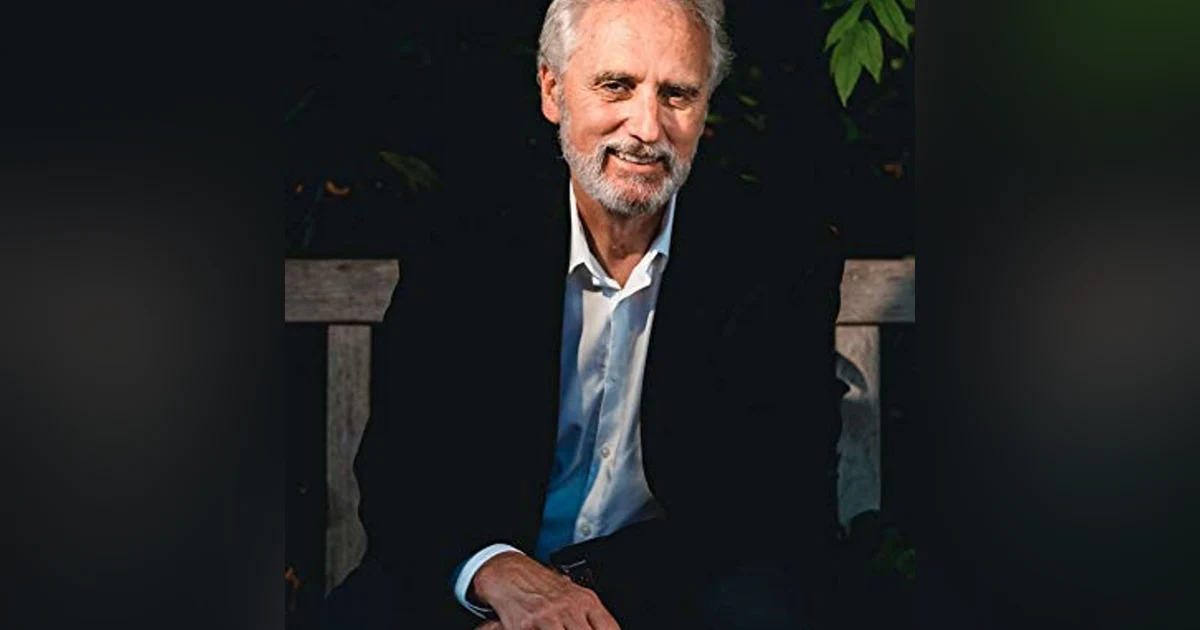

Send us Fan Mail Send us Fan Mail In this captivating episode of Living the Dream with Curveball, we welcome Rick Norris, an award-winning creator, writer, and composer who is pioneering a unique reading experience with his musical novels. Rick introduces us to his Christian fantasy series, *Angelic Wars*, which combines storytelling with the enchanting element of music, allowing readers to engage with the narrative on a deeper level through QR codes that trigger angelic songs. Listeners will...


 RSS Feed
Key Takeaways
- Rick Norris is pioneering a unique reading experience known as musical novels, which integrate original audio tracks of angels singing through QR codes and hyperlinks within the text.
- The Christian fantasy series, Angelic Wars, explores the internal struggles and external battles of angels during Lucifer's rebellion in heaven, drawing inspiration from biblical foundations and scripture.
- Writing a musical novel involves composing songs using digital audio software like Logic Pro, which are then enhanced by professional producers and real musicians.
- The books are designed on multiple levels to appeal to a wide audience, offering a standard fantasy adventure for general readers while incorporating detailed biblical footnotes for Christians.
- The audiobook for Angelic Wars: First Rebellion features award-winning narration by Gary Furlong, and the third book in the series, Angelic Wars: Fight for the Human Soul, launches in November.
Send us Fan Mail
In this captivating episode of Living the Dream with Curveball, we welcome Rick Norris, an award-winning creator, writer, and composer who is pioneering a unique reading experience with his musical novels. Rick introduces us to his Christian fantasy series, *Angelic Wars*, which combines storytelling with the enchanting element of music, allowing readers to engage with the narrative on a deeper level through QR codes that trigger angelic songs.
Listeners will explore:
- The concept of musical novels and how they elevate the reading experience
- The creative process behind writing a musical novel, from story development to music production
- The biblical foundations of his characters, including the roles of angels in scripture
- The artistic liberties taken in portraying angels and their attributes
- Insights into balancing biblical truth with fantasy elements in storytelling
Rick also shares exciting news about his upcoming projects, including the release of the audiobook for *Angelic Wars: First Rebellion* and the anticipated third book in the series, *Angelic Wars: Fight for the Human Soul*, set to launch in November. With heartfelt reflections on the journey of creativity and the importance of the process, this episode is a must-listen for anyone interested in the intersection of literature, music, and spirituality.
For more information on Rick Norris and his work, visit www.angelicwars.com
www.ricknorrisbooks.com
Frequently Asked Questions
What is a musical novel by Rick Norris?
A musical novel is a unique reading experience where readers use QR codes or hyperlinks within the book to access original audio tracks of characters singing, adding an emotional and auditory dimension to the story.
How are the songs created for Rick Norris's books?
Rick Norris creates initial scratch tracks using music production software like Logic Pro. He then collaborates with producers like his son Devin and Lyle Johnson to bring in real musicians and vocalists for the final polished tracks.
What is the inspiration behind the Angelic Wars series?
The series is inspired by biblical accounts of angels, the book of Revelation, and the historical event of Lucifer's rebellion, blending scriptural truths with imaginative fantasy elements reminiscent of Lord of the Rings.
Where can readers find Rick Norris and his musical novels?
Readers can find more information, free short stories, and updates about his books and audiobooks by visiting his official website at angelicwars.com.
Welcome to the Living the Dream Podcast with Curveball. If you believe, you can achieve. Welcome to the Living the Dream with Curveball Podcast, a show where I interview guests that teach, motivate, and inspire. Today's guest is Rick Norris. He is an award-winning creator, writer, and composer of a new type of reading experience, musical audio. His Christian fantasy series, Angelic Wars, features audio tracks of angels singing every time you interact with a QR code or hyperlink in the book. So he's here today to discuss what a musical novel is and how it plunges the reader into a new experience. So, Rick, welcome to the show.
SPEAKER_00Thank you, Curveball. Thank you for having me on your show today. I'm excited to be here and uh listen to some of your shows, and uh it's been very inspiring.
SPEAKER_01Well, I appreciate it and glad to have you. Why don't you start off by telling everybody a little bit about yourself?
SPEAKER_00Uh yeah, so I'm uh I write musical novels. Uh my third one is coming out in the uh the fall, November. Uh basically, what musical novels are is a different kind of a reading experience where uh uh the reader gets to experience a little bit more about who the character is through singing. So the stories that I write right now are Angelic Wars is the title, the theme of the series, Angelic Wars First Rebellion is the first one. And basically it's the internal struggles and the external battles among the angels for the control of heaven during Lucifer's rebellion. So something like uh Lord of the Rings meets Star Wars, but with angels in heaven. And uh when you get to a point where uh angels are crying out to God or worshiping God, because from the Bible we know that angels sing, uh, is that um there's a QR code and the lyrics are there, so you get this extra dimension of character uh of them singing. You get to feel what they're feeling when they're in trouble or when they're excited.
SPEAKER_01Well, how do you how how did you actually, or how was someone actually create a musical novel?
SPEAKER_00So uh I write the novel, and as I go through the novel, I may earmark a place where I think would be good for a song. And so I don't really start writing the music until I'm halfway through or more of the way through in the novel, uh, because that in itself takes a lot of time uh to put a song together. Uh, the way I do music is that I use a uh software Logic Pro, which is a very standard software that uh musicians use for doing TV and creative elements like that, movies, um, where you have all the instruments and singers. And then I do all the tracks, and they could be horns and strings and background singers and a gong. Uh, and then I send it to the first producer, my son, who actually does write music for TV shows and commercials, uh, Devin. And um, he then uh brings on real musicians, and then they go, he substitutes real musicians for every one of the tracks, except for maybe the strings, um, for uh the song. And then he goes to another producer, uh Lyle Johnson, who then uh puts it all together, does all the mixing, sometimes brings in the vocalists, and so then we have a finished product. Uh, and it all is first in a scratch track type thing, a pro forma in this software, but then substituting uh real musicians in its place.
SPEAKER_01Well, talk about how your book ties into the Bible and what kind of angels are in the Bible.
SPEAKER_00That's a good question. Uh, because you know if you watch everything from uh what's the Disney one, uh Fantasia, you have the little angels, the little fat little cherubs, you know, shooting around from Greek mythology, I guess. Um angels are in lots of different literature. Um, because I'm a Bible teacher, I actually have footnotes to the Bible of the settings that I use and also the uh a lot of the language that the angels use. And so uh I do that on purpose just to give some sort of grounding of what I'm writing. Um, but in the angels, uh, I think in the the actual Protestant Bible, which is 66 books, I think there's only really two angels, uh, to Gabriel and Michael, um, that are named. And then in the Apocrypha, that's the seven books that are added uh to the Catholic Church. Um, you have other things like Raphael and Malachi and Uriel. So I use those two. Uh what I did do is I changed uh Raphael into Raphael, uh, and I did that as an honor to my Italian grandmother because she's about as close as you can get to an angel of people I've known. And um, and so I have like two angels that are female. Um, I know one person wrote in a comment saying, Well, angels are all male. Well, we use the names Michael and Gabriel as male, uh, and I think one or two places they had mentioned that they may have somebody that may have been an angel kind of looked like a man, but for the most part, they don't have a gender. There's no sex. I mean, they don't reproduce, so there really is nothing of male or female in angels. So I kind of took that artistic liberty of that. So then I I I wrote this uh song, this um book, uh, using scripture as a guide. And one of the things I did is I used the uh seven cities of revelation, which is uh see if I go through a few of them anyway, Philadelphia, Ephesus, Thyratirus, Artis, uh, Smyrna, uh, and I uh use those as districts in heaven. And I use my artistic license to actually create heaven. And uh so this way um there's a there's a setting that people can grasp onto uh when reading uh the first three novels that I've done. And so I go through all that, and then when I get to the the songs that I write, um a lot of those have scripture in them, a lot of scripture. But that doesn't mean that you have to be a Bible lover or somebody that likes scripture or somebody who's a Christian to enjoy the books, because I write them on three different levels. Uh, the one is if you have no faith at all, uh you're an atheist uh or um not a Christian or something, you can read it as you would read Star Wars or uh Lord of the Rings or anything like that. Uh the second level is I have the footnotes, as I said, is that as for people who are Christians, they can kind of see uh where this comes from. And then the third level is I have just a small uh partial uh Bible study of the Gospel of John, which talks about a lot of things uh in the book uh that uh a person can go into on my website. So I I try to address it that uh people of whatever persuasion they are um would enjoy it or no persuasion. And that's usually the way I teach anyway, uh of different things.
SPEAKER_01Well, let's talk about how you balance biblical truth, fantasy, and imaginations when creating characters and events.
SPEAKER_00So uh the book of Revelation uh has the New Jerusalem, and so it actually has the throne of God in it, and so that's actually on one of the scenes, so that definitely is part of it. Um, the whole structure of the um the thing talks about that there's three levels of heaven, and Paul had said in one of his letters in one of his letters that I knew a man that went to the third level of heaven, so I created three levels of heaven, because that's in the Bible. Uh and so that's how I I that's the foundation of the two things of how I created uh heaven. Um, and then also the fact that there's no darkness in heaven prior to Lucifer, that everything is light, the Holy Spirit is everywhere, so that's there. However, when the bad guys come, darkness comes. And so basically the story starts off as seven angels called the Symptom Viri, which is also the name of the band that plays the music that's on Spotify and iTunes. If you ever look up Symptom Viri, um is that they are commissioned, the seven, to quell a rebellion in heaven. And when they're starting, um, they think it's a small rebellion, and they're even shocked that there's even a rebellion because nothing like this has ever happened. There's never been a good versus evil because there's never been an evil, and so it's kind of like the Lord of the Rings in that in that uh aspect. So as the story goes on, they uh they ultimately realize that it's one third of the angels of heaven that are rebelling, and that is also uh in the Bible of when Lucifer fell, one third of the angels fell with him. So that is putting it together there also. Uh, so uh it's it's um very important to try to stick as close as I can to it, but there it is a fictional novel, and basically, fiction, even though you are uh maybe teaching biblical truths, fiction is a good way to teach. I mean, Jesus used fiction a lot in his parables, you know, just all the parables, you know, they may have related to maybe a real event of something that was happening in the uh the society there or the culture or the village there, but basically he used it as a way to point in the direction of truth. So using fiction is not contrary to uh the Bible, uh, you know, as long as you're not contradicting things that are in the Bible, which would be apostasy, I guess, or heresy.
SPEAKER_01Well, what uh what are some common things that uh people misunderstand about angels versus how they are uh discussed in the Bible?
SPEAKER_00Well, one of the biggest ones is the uh the cherubim. Now, a cherub is one type of spiritual body or an angel. Cherubim, which is I am, the I am is Hebrew for plural. So one she one cherub is a cherub, two cherubs are cherubim. And what people think about cherubs, there's these little fat things on, as I said, like Fantasia, you know, running around with little wings and shooting arrows and uh like Cupid, I guess. Um, but what they really are is they are four-faced, very strange-looking uh creatures out of Ezekiel. And let's see if I can remember the faces. We have the face of a lion, an eagle, an ox, and a human. And I play that up, and as it also turns out, uh in the Bible, Satan or Lucifer was a cherub. So he has this kind of design. So that's one thing, and they have four wings. Then you have the seraphs, or plural for a seraph is seraphim. You have the seraphim, which uh are like the standard angels that we see, you know, these glorious creatures that have six wings, um, two wings to fly, uh uh, two wings to uh cover the, I guess, was it two wings to fly, two wings to cover the ground. Um trying to think of what what's all the different uh uh uses of the six wings are. I don't remember right now, but that's the kind of angels that we kind of see. And some of the pictures that I have in the book, there's illustrations done in the book, are of uh cerebim. Uh I'm sorry, uh, yeah, cerebim. And my wife does the illustrations, and so that's what people normally think about when they think about angels.
SPEAKER_01Well, uh, when someone picks up your musical novel, Angelic Wars, talk about what what you hope they will uh walk away experiencing physically or spiritually and emotionally, and could this uh new form of uh creation change reading?
SPEAKER_00Um, you know what? I don't know. Uh it's um uh yeah, I think it will be um something new uh for people. Um I you know it's well let's say for example, if um a musical and you go to a theater, uh you see a TV, sound of music, or some of these things, you see these, I mean I'm dating myself, sound of music, right? 1960s. Um, so you see these musicals, and you know, you have the scene, and uh all of a sudden, you know, let's say in the sound of music, the uh the nun is trying to tell Julie Andrews that she must do you know great things or different things by climbing every mountain, like that. Well, in a real situation, when people are having a serious discussion, they're really not going to be singing, yeah, you know, or like in Laban's Arab, you know, during a war, they're not gonna be singing. But musicals are good in that it helps use the music to help you feel the emotion of who the character is, even though realistically it wouldn't happen. In my case, because angels do sing uh as part of their nature, it is not only do you feel the emotion of the angels, but you also uh have something that's realistic that can take place in this uh fantasy world. Uh, it's not like when an angel is, for example, there's a scene where an angel is in trouble and crying out to God in song. Well, in Psalms, David cried out to God a lot. And psalms are songs, uh, and so that's not unusual. Uh, when we have an angel that's joyful and excited, uh, like Gabriel, is then uh that's actually the first song in the in the book. Um, he's singing out in joy to God, and so um that's not unusual. That's something somebody would do in that situation. So, what somebody can get out of this is that one, they can feel that um angels have qualities of humans, and they could uh identify with that. And someone would say, Well, how can you make that assumption? Well, one way I can make that assumption is that um we know that one-third of the angels made a choice, out of free choice to abandon God, to turn their back on God and follow Satan. So there we have free choice. So that's a human, that's a human attribute. So, in order, putting that together in the book and saying, well, is that realistic? The answer would be yes. So if you have a free choice, now that means you have emotions, and then you can have a whole set of emotions of having a choice of having them or not having them. And so people can feel, and I've actually had comments uh on emails, I have comments on on uh Amazon and different places of people saying how they identified with a certain angel because of what they were struggling with, and how they can feel it through the um the sound of the music coming through. And so uh that's one thing. Uh the second thing, you know, if you happen to be a Christian um or or not, I mean, you're actually reading scripture because I have a lot of scripture in there when they talk. Um, you know, I have even some of the scenes. I have a scene from uh Judges from Gideon in there. Uh, I think that was in book two, uh the end of the beginning. And so um this way people can uh see if they want, if they choose, the Bible come through in another situation, uh, but this time with angels playing the part.
SPEAKER_01Well, tell us about any upcoming projects that you're working on that listeners need to be aware of.
SPEAKER_00Sure. Um, right now we just released last week the first book, uh Angelic War's First Rebellion in audiobook. It's done by an award-winning narrator uh or voice artist and a producer. Uh, and so it's a very exciting uh rendition of this book. I'm I was very impressed with what he did, uh Gary Furlong. And so um uh he's I mean I asked him, I said, because this this is in heaven, there's many different kinds of people. Give me a bunch of different voices, Scottish and and uh uh Irish and British and American. He did it all, and even with even the females, he did it all, and it was just amazing. Um, and when you put that together with the music, you really get to feel it. Um, and uh that's been um uh submitted for consideration for Grammy. So if you have any of your um your listeners who are voting members, uh please check that off under the um uh spoken word, which is where audiobooks come from, uh, and check it out uh and and give us a chance so we could uh win your vote. Um the other project uh is the third book, which is Angelic Wars Fight for the Human Soul. That book is coming out, a musical novel with more songs and more illustrations, uh, coming out in November. However, the music has already released, and the album, which is uh Angelic Wars Fight for the Human Soul, uh has been submitted for consideration for it to the Grammys as um best Christian album, and also the song uh Embrace His Light as Best Song. And that and that comes out of the third book. So these are things that are exciting that are going on right now, uh, in the line of this. And if you have asked me five years ago if I would have done this, I would have laughed. Uh, but I've been a member of the um National Academy for quite a while because I was in the entertainment industry as an entertainment uh CPA, uh business manager for entertainers. So uh as a professional member, I was a member of of that society for a long time, but uh never guessed that I'd be um you know have something that's be considered uh for an award. But you know, it's a long way from saying considered to be nominated. You know, you gotta get votes to get nominated. But hey, I love it.
SPEAKER_01Absolutely. Congratulations on being considered, and so listeners can keep up with everything that you're up to, throw out your contact info.
SPEAKER_00Yeah, so you can find me at angelicwars.com. Uh, and that's uh has uh some free books on there if you join the mailing list. Uh there's a lot of people on uh mailing lists I have, uh 10,000, and we have monthly um contests actually for uh Amazon gift cards that relate to what's in my novels. And and I have about not that many, maybe about 50 or 60 people that enter the contest every month. Uh, but um, it's a lot of fun. And then also if you uh sign up for the mailing list, there's a couple of small stories, short stories that relate to the um the novels that you get for free. So we always are are trying to enhance people's reading experiences in different ways.
SPEAKER_01All right, we'll close this out with some final thoughts, maybe if that was something I forgot to talk about that you would like to touch on, or any final thoughts you have for the listeners.
SPEAKER_00Yeah, um, it actually has to do with the theme of your show, actually. Uh, I was listening to your show in the bat, and you were talking about um, you know, you could achieve anything to set your mind to. And the one uh addendum I'd like to put to that is that um that in my experience is that rarely is that a straight line. You have something that you want to, you dream about and you want to get there, but it rarely is a straight line to get there. It's always a very curvy line. And from a from a Christian point of view, uh, I believe it's God trying to teach us during the journey before we get to what we may want or what he may want, which is down the line. And when we achieve that dream that you talk about, you look back and you see this squiggling line, this path that you went through, and you realize what you've learned during that time, and that it really wasn't the destination that was the most important thing, but the journey to get there.
SPEAKER_01Absolutely, ladies and gentlemen. And if anybody out there can uh help Rick uh get that Grammy, please do so or share this episode to somebody who can. And you know, uh check out the uh Angelic War series and the musical novel. It's definitely interesting, and check out the music and also check out www.curveball337.com to keep up with all things living the dream. Thank you for listening and supporting the show. And Rick, thank you for all that you're doing in the music music audio space, and thank you for joining me.
SPEAKER_00Thank you very much. I enjoyed it.
SPEAKER_01For more information on the Living the Dream with Curveball Podcast, visit www.curveball337.com. Until next time, keep living the dream.