Rebuilding from the Inside Out: Ronald Zion Roseboro's Journey to Shame Free Living
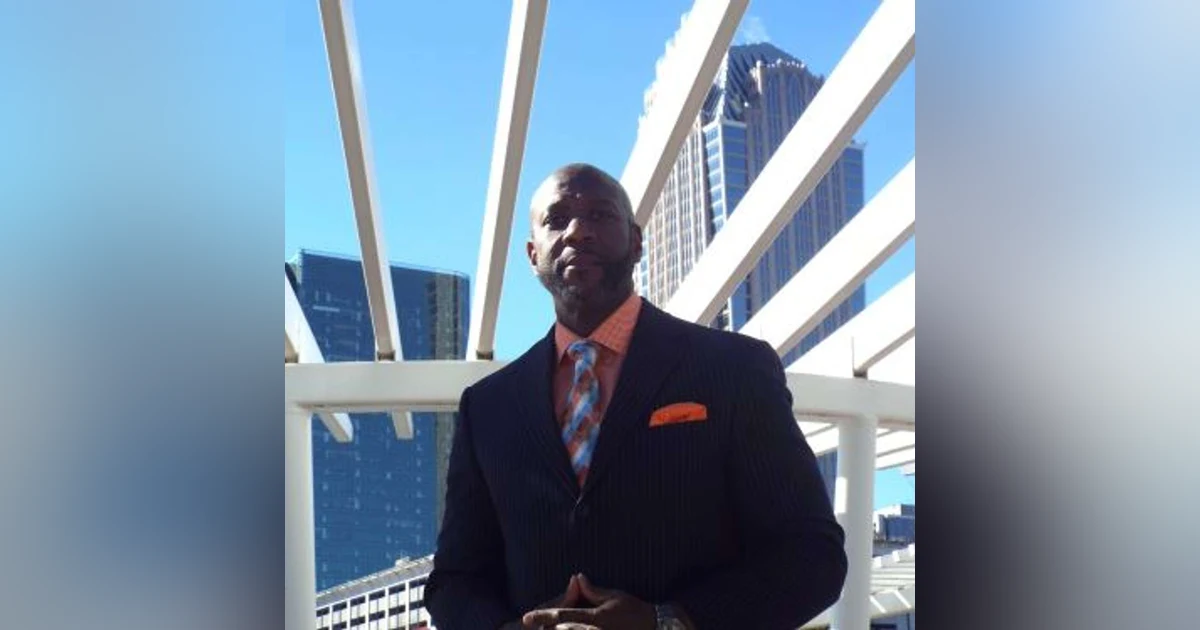

Send us Fan Mail Send us Fan Mail In this powerful episode of Living the Dream with Curveball, we are joined by Ronald Zion Roseboro, a life coach and trauma-informed expert whose journey from incarceration to empowerment is nothing short of inspiring. Released from the US prison system in 2004, Ronald has transformed his life and now serves as the founder and CEO of Shame Free Life Coaching and Consulting, where he helps men rebuild their lives after trauma and loss. Ronald shares his person...


 RSS Feed
 Send us Fan Mail
In this powerful episode of Living the Dream with Curveball, we are joined by Ronald Zion Roseboro, a life coach and trauma-informed expert whose journey from incarceration to empowerment is nothing short of inspiring. Released from the US prison system in 2004, Ronald has transformed his life and now serves as the founder and CEO of Shame Free Life Coaching and Consulting, where he helps men rebuild their lives after trauma and loss.
Ronald shares his personal story of overcoming adversity, including the challenges he faced during his upbringing and the pivotal moments that led him to seek a new path. He discusses the creation of the BRIC Method, a unique approach to healing that encourages individuals to unpack their emotional baggage and reconstruct their lives, one brick at a time. With a focus on the importance of identity and purpose, Ronald emphasizes the need for men to embrace vulnerability and seek support in their healing journeys.
Listeners will gain valuable insights into the symptoms and misconceptions surrounding trauma, particularly in men, and how societal expectations can hinder emotional expression. Ronald’s passion for helping others shines through as he outlines his upcoming projects, including the Samson Restored movement, which aims to foster a community of support for men navigating their own challenges.
Join us for an uplifting conversation that highlights the resilience of the human spirit and the transformative power of coaching and community support. Ronald’s journey serves as a testament to the idea that it’s never too late to rewrite your story and pursue a life of purpose and fulfillment.
What You’ll Learn in This Episode:
- The impact of trauma and the importance of healing
- Insights into the BRIC Method for personal reconstruction
- The significance of identity in shaping purpose
- Common misconceptions men have about seeking help
- Details about the Samson Restored movement and its mission
For more information on Ronald Zion Roseboro and his work, visit www.theshamefreelife.com to schedule a free discovery call and explore his coaching services.
Welcome to the Living the Dream Pilot Kansas with Curve Ball. If you believe, you can achieve. A show where I interview guests that teach, motivate, and inspire. Today I am joined by Life Coach and Trauma Inform Coach, Ronald Zion Roseboro. Ronald was released from the U.S. prison system in 2004, and 20 years later, he is the founder and CEO of Shame Free Life Coaching and Consulting. He is also the inventor of the Brick Method, a blueprint for reinventing and rebuilding after loss. Coach Roseboro is the author of several books. And in 2026, he will be launching the Samson Restored movement. And I'll let him tell you about that. And we're going to be talking to Ronald about everything that he's up to and gonna be up to. So Ronald, thank you for joining me.
SPEAKER_00Thank you so much for having me, Kurt. Well, I really appreciate that. Um I'm excited about uh this uh this dialogue. We're getting ready to dive into.
SPEAKER_01Absolutely. Why don't you start off by telling everybody a little bit about yourself?
SPEAKER_00Yes, sir. Well, you know, as you indicated, I am a trauma recur, trauma-informed coach as well as a professional life coach. Um, but I didn't get here overnight. So I had to go through a lot of bumps and bruises and lacerations of life uh to get me here uh through experience and through academia. Um I really set my heart and my mission is to um to be a pillar in my community, uh, specifically uh amongst men and uh men who have uh endured trauma, uh may find themselves being victims of trauma unbeknownst to them. And so that's where I come in uh just to help them rebuild themselves.
SPEAKER_01Well, tell Alyssa about your story, you know, uh as much as you want to about you know your story from going to prison and getting out and uh rebuilding from there.
SPEAKER_00Okay, absolutely. So um grew up as a youth, um, two-parent home. Um my mother, she um divorced my father when I was age two. Now um there was a gap in my life, even though that my mother she remarried and uh to a wonderful man who uh taught me all about um how to be how to steward the household well, how to not just pay bills, but to but but to invest your money. And and so um for that, you know, I'm forever grateful. Um, but there was still a hole in my heart, there was a hole in my soul because there was something that was missing, and I just needed someone to a male specifically, uh, with no ulterior gender, uh, to show me how to become a man as I began to grow older and as I began to um uh look at uh various uh uh peers uh within my community. And and and so um with that particular deficit in my life of not having uh a man to really show me how uh to become a man, I began to pivot and garner information from my peers and finding out that they were just as as um as uh lost as I was uh when it comes to uh manhood. And so um and it's something about when when you have a young boy, a young man child who is hungry and thirsty uh for masculinity. And you know, we live in a society that tells us uh that that manhood is the polar opposite of what it actually is. And so um during those times I had to endure bullying, you know, as a youth. And we see all types of bullying nowadays, whether it's cyberbullying, uh outright physical uh altercations uh that are taking place, uh, emotional, psychological bullying. And and so it left me thinking less than who I was. Uh it it it had me believing that I was completely a reject, I was unacceptable, um, and uh it was it was a very hurtful time in my life. And as I began to get older and um had to basically fend for myself and fight for myself, uh defend myself, um I began to uh garner a little bit more respect, but there was still something missing in my life, and it was a compass, a navigation to point me into the way or the direction of manhood. Uh, but up until that time I was completely lost, and again, following individuals who were just as lost as I was, and so um I began to look up to drug dealers, I began to um befriend drug dealers, and they likewise befriended me, and and and we're hanging out, and I'm looking at all of the money, all of the cars, uh, I'm looking at the clothes, uh, the barrage and buffet of women, and and and all of these uh trinkets, uh, if you will, trinkets of destruction, uh, I began to look at it uh as being um uh something to salute and to celebrate uh amongst those who were also blind to manhood. And so I met a woman. Uh we had a uh a year uh relationship. She was uh the daughter of a um sergeant in internal affairs who uh who later I found out who uh his gun was taken from him for committing domestic violence against a woman who was not his wife, and then later fired from the force uh for in indiscretions that took place on the job. Uh, dated his uh his daughter for about a year, uh year and a half, give or take, and she accused me of assault. So at that time of the accusations, uh I went on a mission to uh to retain an attorney uh after interviewing several attorneys uh to take my case to prove my innocence. Um, but neither here nor there, uh I was still uh uh convicted and sentenced to five years and one month. So this was very traumatizing to me. Uh not only uh now let me back this up a little bit so you can get a real bird's eye view of who is before you. So at that time uh of my um uh before my incarceration, uh, I was a single parent of my daughter. I was also uh a um an employee of a of a well-known bank as well as an insurance company during that time. And also I was in the college transfer program um in a local community college on the cusp of transferring. So um I had, even though I did not have a sense of manhood, I had a sense of urgency uh to move into a position of life uh to be the best that I could possibly be at that time. So now I'm thrusted into an uncivilized and barbaric culture that is not conducive for human growth or development. It does not uh have within it the system that is, uh, the means nor the desire uh to transform you. So my transformation took place uh from the inside out. It took it took place by the grace of God, it took place by the power of God, but also my desire uh to turn the page and to turn this nightmare into a dream. So that began my journey of uh leaving uh the prison uh experience, uh the prison trauma, if you will, to move into a place of uh self-determination. And uh it led me to my undergrad work. I received my bachelor's, that opened the door for my graduate work to receive my master's, that opened the door uh for uh for certifications, uh, not only in trauma informed personal uh professional life coaching, but also for uh sexual addiction recovery coaching as well. That's very needful uh within the community of men that we don't oftentimes talk about. So um that's pretty much a synopsis, but we can we can go in any direction that you would like to, but I just want to uh to kind of just lay a foundation of where I was uh and and and the and the journey, the rigorous journey and uh of triggers, trauma, anger, resentment, revenge, uh, all of these emotions that I had to personally wrestle with every single day. So you're not just looking at a finished product, I'm still on the potter's wheel. However, when I look in my review mirror, I'm nothing like I once was, and I'm nothing like where I was. So um we can uh definitely uh switch gears whenever you would like.
SPEAKER_01Well, let's talk about the shame free life coaching and consulting company that you're the founder and CEO of, and also the BRIC methodology.
SPEAKER_00Yes, sir. So the Shame Free Life Coaching and Consulting is a um a coaching practice uh that's specialized in helping men rebuild their lives. Um and I specifically say men because again, uh where I am uh in life, uh I want to give back what I never received from a father, from from a brother. I'm I I'm I have no brother, no brothers nor sisters. Uh so uh oftentimes as men uh we try to soldier it ourselves and we try to uh try try to try to uh to ascertain what manhood truly is when we really don't have a blueprint, we're wrestling with so many issues. And so I package this up, not only my experience, but also my academia, and um developed uh or created my own coaching practice uh dealing with trauma-informed coaching. And so there's so many issues that come along with that, be it um uh self-hatred, uh rejection issues, uh, and uh imposter syndrome, so many different issues that we wrestle with as men or we camouflage. But the Shame Free Life Coaching and Consulting, uh it is a coaching practice that offers one-on-one coaching, group coaching, uh, and also uh just piggybacking, uh piggybacking on what you mentioned earlier in regards to Samsung Restored. Samson Restored is basically a program uh that um that came out of the book that I wrote. Is there a Samson in you? Mind you, I wrote this book while I was incarcerated. So Samson Restored is a is a uh is a support group of men uh to come together to not just talk about real life experiences, the things that we've gone through in life or where we may be stuck in life, but to come up with a blueprint on how to become unstuck, uh, to be the best uh the best man, the best father, the best husband, the best brother, uncle uh that we can be uh to the next person. And the brick method is a book uh that I wrote, and um from this book, a program developed uh out of it uh to help men rebuild their lives one brick at a time, because oftentimes we find ourselves uh in a whirlwind of trauma, uh loss, grief, brokenness, and um it destroys our lives. Whether it's a divorce or whether it's a foreclosure, whatever the case may be, uh we find ourselves standing at ground zero with all of the bricks of the house, the the career, uh, the family, the marriage, et cetera, that we once had, uh, that's now completely leveled because of a circumstance or a crisis, a tragedy. And so we take those bricks and we pack them up in the backpack, we put our backpacks on, and we just meander through life with the weightiness of the bricks in our backpack. Well, the brick method is designed specifically, um, is subjective for every single man because we're all different. We all come from different backgrounds and have different uh types of issues that we wrestle with. But uh the brick method is designed to help you unpack that backpack as we partner together to come up with a blueprint on how to become unstuck and to rebuild your life right there where the damage took place, the trauma took place, the adversity took place, and um, I will help you, we will help you rebuild your life uh so that you can um uh be a testimony of uh of what you can do uh despite what you have endured.
SPEAKER_01All right. Well, from your perspective, talk to the listeners about your definition of trauma and uh the symptoms of trauma.
SPEAKER_00Well, uh there's so many definitions of trauma. Uh, it is uh an acute or chronic um uh adversity or injury that takes place to the psyche, uh also to the soul. Um, and uh it comes with many uh uh different uh uh characteristics or qualific uh qualities, um symptoms that is, uh, that one can denote. I look at trauma as a deep emotional, psychological, or spiritual wound uh to the mind, the will, and the and the emotions, which is the soul. So, in essence, trauma is an injury to the soul of a man or a woman. Something that happened is very difficult to shape. You begin to suppress it. You may suppress it or camouflage it with alcohol, drugs, women, relationships, jobs, working overtime, uh cars, jewelry, clothes, status, education, etc. Um, there's so many different uh layers and camouflages and masquerades uh that cover trauma. But when we look at some of the symptoms of trauma, it can uh it can be but not uh all inclusive to uh or limited to a hypervigilance, uh depression, anxiety, suicidal ideation, um all of the the nightmares um that that one may have, uh being very um hypersensitive in some areas, a forebolding of impending danger. Uh the the the fight, flight, freeze syndrome is in effect because we're talking about the neural uh uh uh the neural pathways uh have been introduced to a danger, uh, but to the one who has endured trauma, it's a never-ending danger, and you always look for it. You expect for this particular danger uh to happen uh because it happened before. So those are some of the symptoms um, you know, and uh and a definition of trauma.
SPEAKER_01What is the biggest misconception that uh people have about trauma-informed coaching?
SPEAKER_00Well, I think for um for men exclusively, uh this is the general population that I work with uh the most, um, that we feel that it just happened. And um I don't need to see a therapist, I don't need to see a counselor, I don't need to see a life coach, I'm fine. But we find ourselves medicating the injury instead of healing from the injury. And whatever we don't work out, we will eventually act out. So I think one of the misconceptions is uh that uh I'm fine, it happened uh 10 years ago, 20 years ago, 30 years ago, five years ago, but I've gotten over it. Um but uh one will find that that the activities that a person is involved in, how they think, how they process, uh it shows that uh that the trauma is still there, uh playing in the background, like uh uh like like elevator music. Uh and so I think that's that that's one of the greatest misconceptions. Or another misconception is you know that this is a part of my personality. Uh it's very easy for us to take a trauma injury, and now we have adopted uh it as being a part of or accept it as being a part of our personality, uh, when in fact uh it points to an injury that took place that we can heal from. It's not a part of your personality to be hyper-vigilant, it's not a part of your personality uh to have um mood swings that that swing from the from the east to the west uh at a moment's notice uh that can be directly linked to uh what happened to you.
SPEAKER_01Why do you feel like more men don't don't go to therapy or embrace therapy like like women do?
SPEAKER_00That's a very good question. I think that uh men we we society have have taught us um to uh to remain silent, to suck it up, to man up. But it's it's impossible for you to man up if you don't speak up. I think that um we have society have have have uh programmed or conditioned us to believe that uh to talk about certain things that have happened to you that is traumatic shows a sign of weakness when in fact it shows a sign of strength. Um many of our women um they have been lulled in the sleep, uh lulled to sleep in the lap of um of error, and thinking that, you know, um, well, you're not supposed to cry or, you know, you know, I want a strong man, I'm looking for a strong man. Well, you know, Lois Lane was looking for a strong man as well, uh, and she found him in Superman. But she later found out that Superman is also Clark Kent. So we have to uh get to a place of being very comfortable in ourselves to uh to not just operate in Superman mode, um super personality, super strong, uh just just just exhibiting so much strength in various areas of our lives, um, which can be our kryptonite, but to embrace that Clark Kent, that vulnerable side of us, the real side of us, because there will be no superman without Clark Kent. So both are one and the same.
SPEAKER_01If you could give your younger self one piece of advice, what would that piece of advice be?
SPEAKER_00If I could give my younger self some advice, it would be to go after your identity. Find out your identity. Because when we can connect to our identity, it automatically opens the door to our purpose. And there's so many people, and I was one, had a false sense of identity. I thought my my identity was connected in how many women I could sleep with, how many bars that I could frequent, how many parties that I could go to. But it had nothing to do with my identity. But I think identity is so uh it is so important and so essential because it is your calling card to life. It is greater than your social security card. It is your identity that was given to you. And uh, like I said, it really opens so many, so many doors of opportunity, uh, so many doors of purpose, assignments, your calling, why you are here on this planet. Uh, and so now when we know better, now we're prompted to do better and to now walk in such a manner that um that anything that is contrary to my identity, it's a waste of my time. That would be my advice to myself.
SPEAKER_01So, besides that that that Samson movement, talk about any other upcoming projects that you're working on that listeners need to be aware of.
SPEAKER_00Uh, yeah, so the the Samson uh restore movement is definitely keeping me busy, um, along with the Brick Method and um and definitely uh one-on-one and group counseling.
SPEAKER_01Okay, well, so listeners can keep up with everything that you're up to, throw out your contact info.
SPEAKER_00Yes, sir. Well, you can definitely find me at theshamefreelife.com. The shamefreelife.com. There you will find uh all of my social media handles, but even more than that, you can also schedule a free uh discovery call just to see if we are um if we have the type of rapport and the connection, the connectivity um that that that you can that we can help you uh rebuild your life one brick at a time. We would love to partner with you and uh the free discovery call um will begin to assess uh where you are right now with life, where you want to go, um, what what the game plan will look like. Uh even Tom Brady knows that you can't win a Super Bowl without a proper game plan. And so you can uh uh get on the uh the shamefree life.com, go there and and and uh and and uh schedule your own uh discovery call. I also offer one-on-one coaching, group coaching. Again, Samson Restored Movement is a um is a uh uh a group, uh if you will, a support group uh to help uh men, uh to help men uh see themselves differently than how they have seen themselves or to challenge our belief system. And also all of my books are there as well uh for purpose uh for purchase, and that's the shamefree life.com.
SPEAKER_01We'll close this out with some final thoughts, maybe if that was something I forgot to talk about that you would like to touch on, or any final thoughts you have for the listeners.
SPEAKER_00Yes, I just want to say that you know, our decisions uh they determine our direction, and our direction determines our destiny. Regardless of how uh far down you may have fallen, you may be at a place uh of rock bottom that you actually have to look up just to see the top, um, that it's not over. As long as you have breath in your body, it's not over. And a lot of times we stay stuck in a chapter when the pen is in our hand to write a new chapter. All we have to do is have the courage, a strategy, a support system, and faith in ourselves to turn that page and start writing again. So you have another chapter.
SPEAKER_01Well said, listeners, you have another chapter. Visit theshamefreelife.com, keep up with everything that Ronald's up to. Get that free discovery call if you like it, or if you know somebody else that needs that free discovery call, let them know about it. Check out the books and uh can't wait to see what that Samson uh restored movement is gonna do to help a lot of people and uh check out that brick methodology and follow rate with you and share this episode to as many people as possible. Also, to keep up with everything, living the dream. Please visit www.curveball337.com and share the website and the show to everybody you know. Thank you for listening and supporting the show. And Ronald, thank you for all that you are doing to help people rebuild their lives and make the world a better place. And thank you for joining me.
SPEAKER_00Thank you, Brother Curtis. It's my it's my honor. Thank you for having me.
SPEAKER_01For more information on the Living the Dream with Curveball Podcast, visit www.curveball337.com. Until next time, keep living the dream.